

Asphalt Shingle Moss Removal in West Vancouver: Costs
Removing moss from an asphalt roof isn’t just about appearance. The cost of asphalt shingle moss removal in West Vancouver depends on roof area, pitch, access, moss coverage and shingle condition, with pricing provided after a quote request. Moss can lift shingles and allow water beneath the roof deck, so the removal method matters as much as the clean-up.
When green growth spreads across a roof, a quick fix can be tempting. But pressure washing and aggressive brushing can strip protective granules and damage asphalt shingles. Use a roof-specific approach rather than treating shingles like a hard surface that can withstand force.
This article explains why roof cleaning matters, what affects the work and how suitable moss removal methods differ. You’ll also learn what to consider about treatment, regrowth and roof condition before deciding on the next step. The aim is a clearer view of the work involved and how to protect your roof’s long-term performance.
Key Takeaways
• Roof area, pitch, access, moss coverage and gutter work all affect the scope and cost of cleaning.
• Pressure washing and aggressive brushing can strip protective granules from asphalt shingles, so use a roof-appropriate removal method.
• Moss treatment can help address remaining growth, but the roof surface, nearby gardens and drainage routes matter during application.
• Watch for lifted or damaged shingles, debris buildup, gutter overflow and signs of water entering the home.
• When moss or roof damage needs professional attention, an assessment can help determine whether cleaning, repair or another roofing solution is appropriate.
How Much Does Roof Moss Removal Cost in Vancouver?
The cost of roof and gutter cleaning depends on the work required, not just the home’s address. Roof area, pitch, access, moss coverage and debris all affect the scope. The project price is determined for the specific site and cleaning work.
Roof size gives an initial sense of scale. A roof under 1,500 sq ft has less surface area to cover than a standard detached home, described as 1,500 to 2,500 sq ft. A larger home can have more roof area, valleys and edges to inspect and clean. The number of storeys and the roof layout also affect how crews reach and work across the surface.
Pitch and access matter just as much. A steep West Vancouver hillside roof with a 10/12 pitch takes longer to work on safely than a low-slope roof with clear access. Trees, narrow side yards and complicated roof shapes can add setup time. Heavy roof moss also takes more care to remove than scattered growth, especially where it has collected along valleys or around roof details.
Roof cleaning may include gutter cleaning, but these are distinct tasks. Clearing gutters helps address leaves and other debris that can obstruct drainage; roof work addresses growth and material on the roof surface. A standard Metro Vancouver moss-removal job takes 2 to 6 hours, including setup, manual removal, gutter clearing and treatment. A larger or more difficult roof can require a different scope.
Roof-cleaning services are described across Vancouver, Burnaby, and West Vancouver. In West Vancouver, hillside access, tree cover and roof design can change the work involved from one property to another. For asphalt shingle moss removal in West Vancouver, a useful assessment considers roof condition alongside moss coverage, rather than treating every stained roof as the same job.
In West Vancouver, plan for loosened moss and treatment runoff so it does not wash into storm drains, gardens or drainage routes. This is a practical precaution, not a statement about a specific local bylaw or discharge limit.
• Ask what the cleaning scope covers: roof surface, valleys, debris and gutters.
• Describe access limitations and visible moss severity when requesting a quote.
• Discuss roof damage separately from moss removal. Displaced shingles, bald spots or soft decking may call for assessment before cleaning.
Avoiding pressure washing and aggressive brushing on asphalt shingles
Professional roof moss removal uses controlled methods, while DIY work depends on the homeowner’s tools and technique. With asphalt shingles, avoid pressure washing and aggressive brushing because both can damage the roof surface.
Soft Washing for Roofing Materials
Soft washing is gentler than forceful pressure washing, but the method still needs to suit the roofing material. Asphalt shingles, cedar shakes and torch-on surfaces have different characteristics, so a method suitable for one roof should not automatically be used on another. Identify the material first, then choose cleaning and treatment methods that respect its surface.
Pressure Washing Risks for Shingles
Asphalt shingles rely on surface granules for protection, and high-pressure washing can strip them away. Pressure-washer tips above 1,500 PSI can remove granules, while forceful spray can drive water beneath shingle edges. That combination can contribute to premature roof-system failure. Avoid directing a pressure washer at moss and algae, even when growth appears stubborn or widespread.
For large moss mats, careful manual removal offers more control. A soft brush can loosen visible growth without blasting the shingle surface. Follow the roof’s slope and shingle layout, avoiding scraping across edges or forcing material underneath them. Aggressive brushing can still cause damage, so remove the growth carefully rather than scrubbing until every mark disappears.
Algae and moss need different cleaning approaches. Dark algae staining may remain after loose debris is removed, while raised moss can hold moisture against shingles. A roof-specific treatment can address remaining growth without high-pressure washing. The right approach takes account of the growth, shingle condition and nearby drainage routes.
Damp, tree-covered North Vancouver slopes can be prone to persistent roof moss, but using more force is not the answer. Distinguish attached growth from loose needles, leaves and debris, and avoid unnecessary abrasion to protect shingle granules. If shingles are worn or pieces are missing, cleaning should not hide those signs.
For asphalt shingle moss removal in West Vancouver, compare methods by how they protect the shingle surface, not just by how quickly they clear the roof. A quote request can help define the work around the roof material, growth and condition. Request a roof cleaning quote to discuss the appropriate approach.
Treatment to kill moss spores and prevent regrowth
Clearing visible roof moss is only part of the job. Treatment, runoff planning and roof condition all affect what happens next.
Moss Spore Treatment
A roof-specific treatment can address remaining moss after visible growth is cleared. Its application should account for the roof surface, nearby gardens and drainage routes, including where runoff may go. Treatment is not repair: chemicals cannot replace damaged shingles or correct soft decking. During roof moss removal, consider both the surface and the surrounding area.
Safety measures include fall-restricting devices, climbing ropes and other personal safety equipment. These help manage the hazards of working at roof height, especially on steep slopes and near edges. The ground also needs attention: consider gardens and drainage routes before applying treatment. This helps manage worker exposure and the path of runoff.
Preventative Treatments
Preventative treatments can slow moss regrowth on asphalt shingles, but their protection has a limited duration. A treatment provider may describe protection lasting 2 to 4 years. Zinc strips used for roof moss prevention can last for decades. Their placement and the roof’s exposure affect how well preventive measures address growth across the surface.
Damp coastal conditions make maintenance especially relevant on shaded, tree-covered slopes. North Shore roof slopes beneath tree canopies can stay damp from October to May, creating conditions that favour moss. Many North Shore roofs benefit from lighter annual moss treatment rather than waiting for a heavy clean. Clearing leaves and needles also reduces debris on the roof.
Pet safety depends on keeping animals away from treated areas until surfaces are dry. Treated surfaces are typically dry and safe for pets again within one to two hours. Because that timing describes typical conditions, keep pets away during application and until the treated area is dry. Gardens and drainage routes also deserve attention during treatment, especially where runoff could reach planted areas.
Before treatment, assess whether the shingles are still suitable for cleaning. Heavy granule loss, multiple bald spots, soft or spongy decking, and missing shingles can indicate that cleaning is unsuitable. Treatment will not address underlying wear or prevent the need for replacement. An assessment helps distinguish moss control from damage that needs a different response.
For coastal asphalt shingles, prevention combines suitable treatment with attention to shade, dampness and debris. Check sheltered areas for returning moss and note damaged shingles or drainage concerns. These observations can help determine whether the next step is preventative treatment, further cleaning or an assessment of the roof surface.
Do you clean roofs in North Vancouver and West Vancouver?
North Vancouver and West Vancouver share coastal conditions that can leave roof surfaces damp beneath trees. In either community, cleaning methods should reflect the roof material, moss coverage and access. Roof cleaning is separate from window washing and general exterior cleaning, so define which surfaces the work covers.
Pressure washing can strip protective granules from asphalt shingles and force water beneath their edges. A gentler process uses careful manual removal for large moss mats, followed by roof-specific treatment where appropriate. This distinction matters on North Shore homes, where shade and accumulated needles can make moss and debris harder to clear without damaging shingles.
Gutter cleaning is a separate task from roof moss removal. It clears leaves and debris from the gutter channel, while downspout unclogging addresses blockages farther along the drainage route. A roof-care plan should clearly state whether these tasks are included. That distinction makes clear what addresses roof growth and what supports drainage.
A cleaning scope may combine roof work with gutter clearing or moss-prevention treatment, but the tasks serve different purposes. Removal clears existing growth, treatment targets remaining moss, and gutter cleaning clears accumulated material. Clogged downspouts may also need attention as part of the roof-care plan. Window washing and broader exterior cleaning involve different surfaces and should not be assumed to form part of roof work.
In Burnaby, Vancouver, North Vancouver and West Vancouver, roof shape and surroundings influence the cleaning approach. A steep, tree-covered roof presents different access and debris concerns from an open, low-slope roof. On coastal North Shore slopes, persistent shade can leave shingles damp, so consider both moss growth and roof condition. Loose moss, damaged shingles and displaced pieces each need different attention.
For a condo building, cleaning coordination goes through the strata, helping define the building scope, access arrangements and affected drainage areas. For a detached home, the plan can focus on the roof, valleys, gutters and downspouts. In either case, roof cleaning and gutter cleaning are different tasks, and a clear scope prevents confusion.
After a storm or rooftop work in West Vancouver, check for visible damage, new penetrations or disturbed roof protection. Debris in a valley can also obstruct water movement. Review these conditions before choosing a cleaning method, so moss removal does not obscure a repair concern or put unnecessary force on a vulnerable surface.
Asphalt shingle moss removal methods
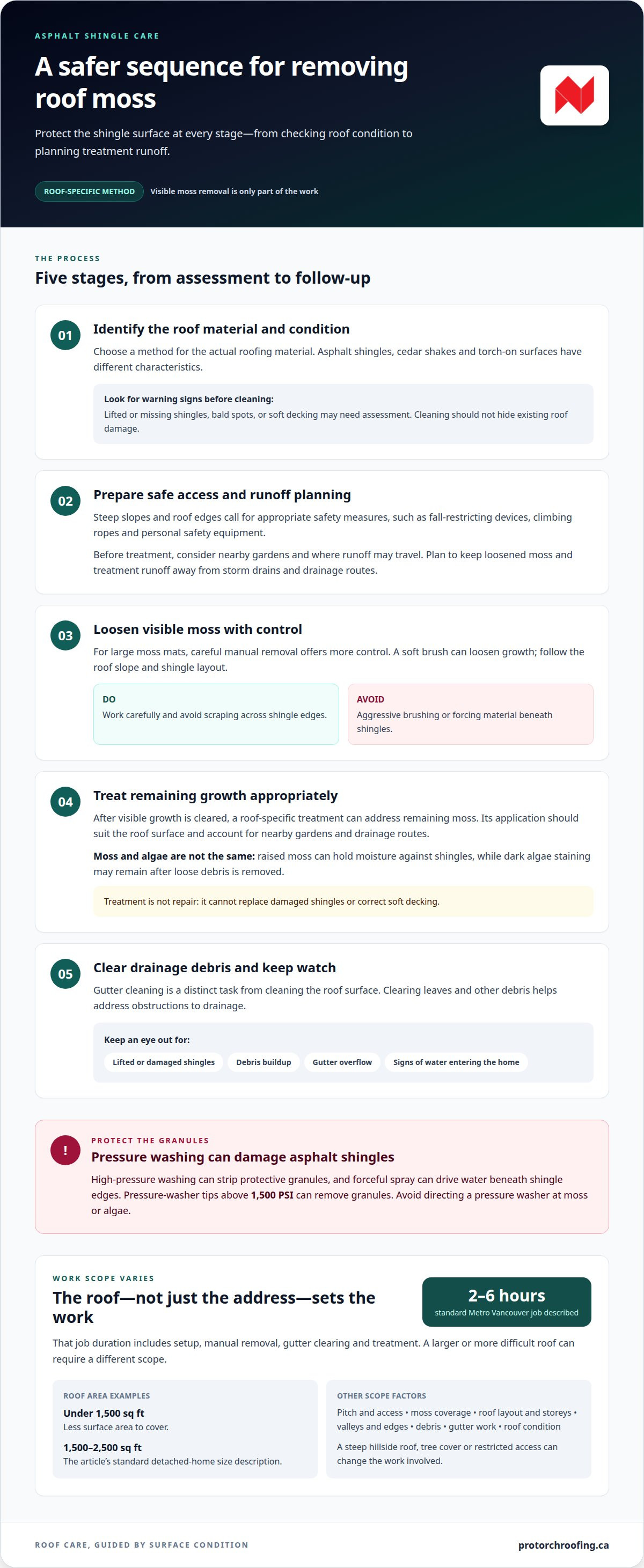
Good moss removal protects the shingles rather than focusing only on clearing visible growth. For residential roofs, the right sequence depends on roof condition, moss coverage and safe access.
Begin with a condition assessment. Look for missing shingles, bald patches, heavy granule loss and soft decking. These signs can make cleaning unsuitable, since removal will not correct worn materials or underlying damage. A roof with scattered moss and intact shingles needs a different approach from one with widespread growth and visible wear.
Remove loose growth carefully. Large moss mats can be loosened manually with a soft brush. Work gently in line with the shingle layout, avoiding force against lifted edges. The goal is to remove bulky growth without scraping away granules. Pressure washing and aggressive brushing are poor substitutes because both can damage the protective surface.
Use roof-specific treatment where appropriate. Once visible moss is cleared, a suitable treatment can address remaining growth. Apply it with the roof surface and nearby drainage routes in mind. Do not assume a cleaner intended for another roofing material is suitable for asphalt shingles. Treatment can support removal, but it cannot repair cracked shingles, granule loss or damaged decking.
Finish with a roof review. Check valleys, edges and areas around vents for remaining growth or displaced material. Clear loose debris without pushing it beneath shingle courses. Note damaged components separately, since a repair concern is not a cleaning detail. This review helps distinguish a clean surface from a roof that needs further attention.
DIY work adds preparation and access decisions. A homeowner may need a roof brush, treatment solution, ladder and fall-protection equipment, then time for setup, removal and cleanup. An average-home DIY job takes 6 to 10 hours. Working at height also creates fall risks, so the method must account for safe access before work begins.
For recurring growth, include prevention in the maintenance plan. Annual treatment is recommended for many North Shore roofs, while zinc strips can help prevent moss for decades. Shade, dampness and accumulated debris still affect roof conditions, so prevention does not replace assessment or maintenance. Timing depends on the roof’s exposure and condition.
For asphalt shingle moss removal in West Vancouver, the takeaway is simple: assess first, remove gently, then choose treatment suited to the roof. If you’re planning work, request a roof assessment to discuss the appropriate approach.
Pro Torch Roofing: Asphalt Shingles
Pro Torch Roofing works with asphalt shingles to help protect the roof’s condition and performance. If moss removal reveals displaced shingles, surface wear or other concerns, a roofing assessment can clarify whether the roof needs maintenance or repair rather than further cleaning.
The right next step depends on the roof’s condition once growth and debris are cleared. Asphalt shingles can remain suitable when they are in good condition, while visible damage may call for a closer review. Pro Torch Roofing works with asphalt shingles, torch-on roofing, custom sheet metal and cedar shakes.
Contact Pro Torch Roofing to discuss your roof and a practical next step.
Plan the next step for your roof
Weather, shade and debris can change a roof’s condition over time. Use each cleaning as an opportunity to consider what the roof may need next, whether ongoing maintenance or attention to a damaged area. For asphalt shingle moss removal in West Vancouver, a clear assessment connects visible growth with the roof’s broader condition.
If the roof needs work beyond cleaning, Pro Torch Roofing offers asphalt shingles, torch-on roofing and custom sheet metal as relevant solutions. The appropriate option depends on the roof and the issue, not simply on the presence of moss. A focused conversation can help establish a practical way to protect the home.
Contact Pro Torch Roofing to discuss your roof and arrange the next step. A considered plan can help you move forward with greater confidence in your home’s protection.
Frequently Asked Questions
Why Should Your Roof Be Cleaned?
Cleaning removes moss and organic debris that can hold moisture against roofing materials. On asphalt shingles, moss can lift edges and allow water beneath the roof deck. For asphalt shingle moss removal in West Vancouver, cleaning can also reveal displaced shingles, worn areas or debris caught in a valley. Cleaning does not replace repairs: visible damage or soft decking needs assessment before work proceeds.
Are the Chemicals Safe for Pets?
Keep pets away from the roof, nearby gardens and treated surfaces during application. Treated surfaces are typically dry and safe for pets again within one to two hours. This describes typical drying conditions, so keep animals away while the area is wet. Consider runoff paths during treatment, especially where water could reach a garden or pet area.
What Is Actually Included in a Professional Moss Removal Service?
A typical Metro Vancouver roof moss-removal job includes setup, manual removal, gutter clearing and chemical treatment, and takes 2 to 6 hours. The exact scope depends on the roof and required work. Clarify whether valleys and gutters are addressed, since those tasks may differ from treating roof growth. Moss removal is also distinct from roof repair, so damaged shingles or decking may require separate attention.
How Much Does Asphalt Shingle Moss Removal Cost in West Vancouver?
The scope depends on roof area, pitch, access, moss severity and whether gutter cleaning is included. A steep hillside roof with difficult access requires a different approach from a smaller, straightforward roof. The project price is determined for the specific work. The scope should make clear which cleaning tasks are included and whether visible roof damage needs a separate assessment.
What Methods Safely Remove Moss from Asphalt Shingles?
Careful manual removal of large moss mats with a soft brush, followed by suitable roof treatment, avoids the force of pressure washing. The brush should loosen growth without aggressive scraping or pressure against shingle edges. For asphalt shingle moss removal in West Vancouver, roof condition matters: heavy granule loss, bald areas, missing shingles or soft decking can make cleaning unsuitable. Assess the roof before removing growth.
Which Moss Removal Products Are Safe for Asphalt Shingles and Nearby Plants?
Use a treatment intended for the roofing surface, and consider nearby gardens and drainage routes before applying it. Do not assume a product is suitable for every shingle or planting area. The application method and runoff path matter as much as the treatment itself. Avoid directing residue into gardens, and consider the shingle condition when deciding whether treatment is appropriate.
Can Pressure Washing Damage Asphalt Shingles or Void the Roof Warranty?
Pressure washing can strip protective granules from asphalt shingles and may contribute to premature roof-system failure. High-pressure tips above 1,500 PSI can remove granules. Whether a particular action affects warranty coverage depends on the written manufacturer terms, so don’t assume a universal rule about voiding a warranty. Avoid forceful washing, and keep the roof’s warranty documents available when assessing cleaning methods.
How Often Should Asphalt Shingle Roofs in West Vancouver Be Cleaned?
Cleaning frequency depends on tree cover, shade, dampness, debris and visible moss growth. Many North Shore roofs benefit from lighter annual moss treatment rather than waiting until a heavy clean is needed. A shaded slope beneath trees may need closer attention than an exposed roof. Recurring moss, blocked drainage or debris in valleys can signal that the roof’s maintenance needs an assessment.
