

Best Flat Roof Materials for Vancouver & Burnaby: 2026 Comparison Guide
In November 2021, a single atmospheric river dumped over 100 millimetres of rain on Vancouver in just 48 hours, forcing many Burnaby property owners to face C$15,000 emergency repair bills. You understand that your roof is the primary line of defense for your building's structural integrity; however, choosing the right flat roof materials feels like a gamble when moss growth and heavy ponding are constant threats in our climate. It's natural to feel concerned about whether your next major investment will actually survive two decades of relentless coastal weather.
At ProTorch Roofing, we believe you deserve total peace of mind through proven craftsmanship and specialized SBS membrane systems. This 2026 comparison guide cuts through the marketing noise to show you exactly how different options handle British Columbia's specific environmental challenges. You'll learn which systems offer the best long-term ROI and how to maintain a leak-free seal for 20 years or more. We're breaking down the technical performance of torch-on systems versus single-ply membranes so you can make a disciplined, informed decision for your home or business.
Key Takeaways
• Learn why Greater Vancouver’s heavy annual rainfall requires specific flat roof materials designed to provide maximum waterproofing and long-term structural integrity.
• Compare the performance of bitumen-based SBS membranes against synthetic single-ply systems like TPO and PVC to find the most dependable solution for your building.
• Discover how to calculate the true ROI of your investment by analyzing the total cost of ownership and maintenance requirements in C$ over the roof's lifespan.
• Identify which materials offer the necessary durability for high-traffic areas and HVAC equipment while maintaining the aesthetic appeal of modern Vancouver architecture.
• Understand why expert installation and custom metal flashing are essential for ensuring your low-slope system remains leak-free and secure for decades.
Understanding Flat Roof Materials in the Vancouver Climate
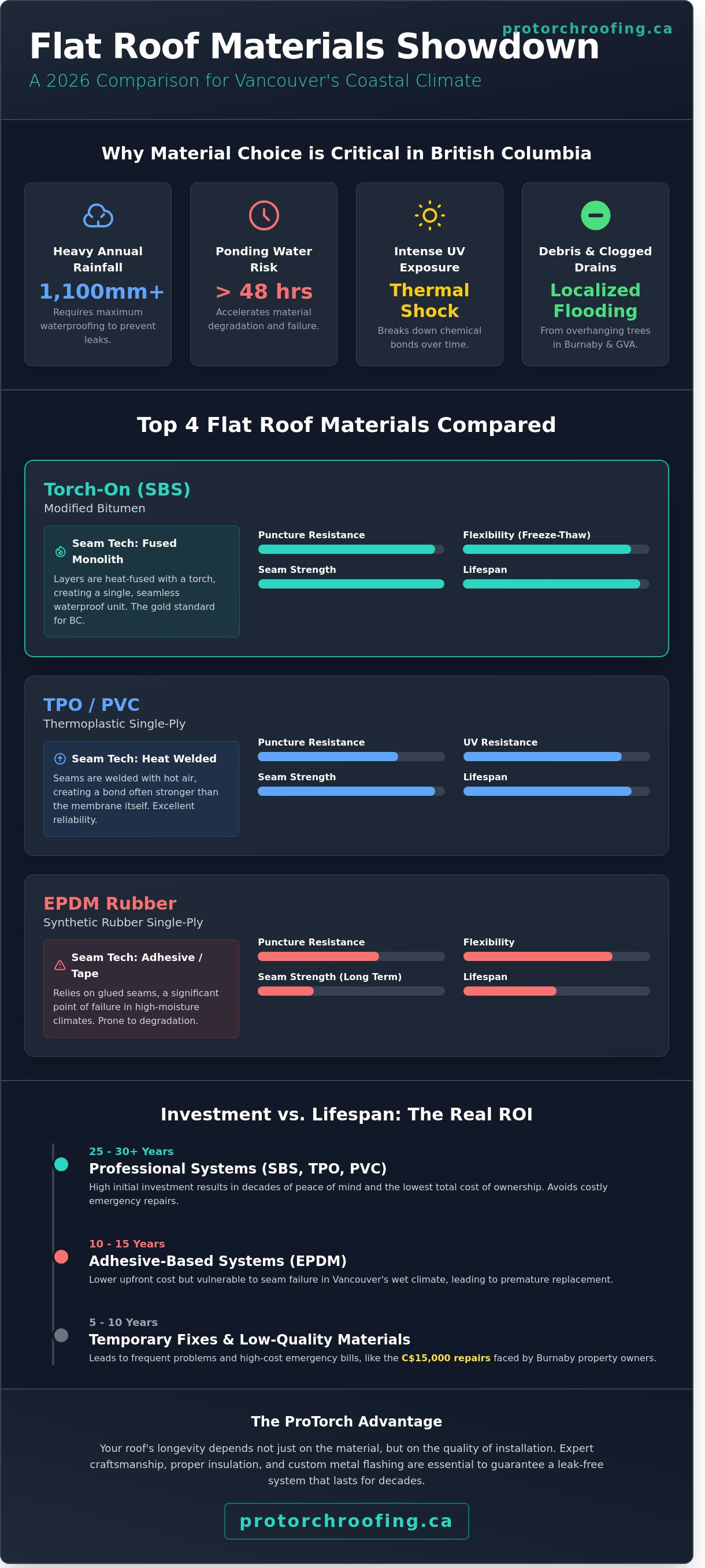
Vancouver’s modern architecture depends on low-slope roofing systems. While often called "flat," these roofs are technically designed with a slight pitch to guide water toward drainage points. Choosing the right flat roof materials is a high-stakes decision in the Lower Mainland. Our region faces over 1,100mm of annual rainfall, which puts immense pressure on a building's waterproofing layer. This environmental reality makes the selection of a durable system essential for long-term structural health.
Standing water, or ponding, is the primary enemy of these systems. If water remains on a surface for more than 48 hours, it can accelerate the degradation of lower-quality products. In Vancouver, the cycle of heavy winter rains followed by intense summer UV exposure creates a thermal expansion challenge. While moisture causes immediate leaks, UV rays break down the chemical bonds in many materials over time. This makes durability a non-negotiable requirement for local property owners who want to avoid frequent repairs.
The Challenge of Low-Slope Drainage in Burnaby
Traditional asphalt shingles aren't designed for slopes less than 2:12. On these flatter surfaces, water creeps under the tabs, leading to rot in the plywood decking. Burnaby’s geography, particularly in heavily treed neighborhoods near Central Park or Burnaby Mountain, adds another layer of difficulty. High debris volume from overhanging branches can clog internal drains and scuppers. This creates localized flooding on the roof surface. We recommend robust systems that can withstand the weight of temporary ponding and the acidic nature of decomposing organic matter.
Why Material Choice Dictates Your Roof’s Lifespan
Cheap, temporary fixes often fail within 5 to 10 years, whereas professional-grade systems provide 25 to 30 years of security. The BC Building Code now mandates higher insulation standards, requiring specific R-values that influence how we install flat roof materials. Proper thermal barriers prevent heat loss and protect the structural integrity of the home. A flat roof membrane acts as the primary waterproofing layer, serving as the final shield between the elements and your interior space. Investing in high-performance SBS torch-on systems ensures your property remains dry despite our coastal climate.
Top 4 Flat Roof Materials Compared: SBS, EPDM, TPO, and PVC
Selecting the right flat roof materials for a property in British Columbia requires a deep understanding of how different systems handle our unique coastal climate. Most modern systems fall into two distinct categories: bitumen-based membranes or single-ply synthetic sheets. The primary vulnerability in any flat roof is the seam. If the joints between sheets fail, water ingress is inevitable. Professional installers focus on how these materials join together to ensure the structural integrity of your building remains intact through decades of heavy rain.
Torch-On Roofing (SBS Modified Bitumen)
The multi-layer protection of torch on roofing remains the gold standard for residential decks and commercial rooftops across the Lower Mainland. This system utilizes Styrene-Butadiene-Styrene (SBS) modified bitumen, which offers exceptional puncture resistance and flexibility. It doesn't crack during Vancouver’s frequent freeze-thaw cycles, even when temperatures fluctuate rapidly between day and night. Because the layers are fused together with a propane torch, the seams become a single, monolithic unit. This creates a waterproof seal that easily withstands the 160 plus rainy days we experience annually in the region.
Once this critical waterproofing layer is in place, the focus can shift to building the actual deck structure. For homeowners looking to create a new rooftop living area, partnering with a dedicated builder is the next logical step. Companies like The Deck Guys specialize in this type of custom outdoor construction.
EPDM Rubber Roofing
Ethylene Propylene Diene Monomer (EPDM) is often described as a giant inner tube spread across a roof. While it's a cost-effective option, it relies heavily on specialized adhesives or tape to secure its seams. In high-moisture environments like North Vancouver or Coquitlam, these glued seams often represent a significant point of failure after 10 to 15 years of service. While the rubber itself is highly durable, the long-term reliability of the adhesive is a common concern for property owners who want a "set it and forget it" solution.
TPO and PVC (Thermoplastic Membranes)
Thermoplastic Polyolefin (TPO) and Polyvinyl Chloride (PVC) are single-ply membranes that utilize heat-welded seams. These welds are physically stronger than the membrane itself, offering a much more reliable bond than glue. These are often called "cool roofs" because they reflect UV rays. This is a vital benefit during Burnaby summer heatwaves where rooftop temperatures can exceed 65 degrees Celsius. PVC offers superior resistance to chemicals and animal fats, making it the primary choice for restaurants and food processing plants. TPO is a more budget-friendly alternative that still provides high energy efficiency and modern aesthetics.
If you're feeling overwhelmed by these options, a professional roof assessment can help determine which system fits your building’s specific load requirements and your long-term budget goals.
Durability vs. Cost: The Real ROI of Flat Roofing in BC
Investing in flat roof materials is a financial decision that spans decades. While a lower quote is tempting during the initial bidding phase, the true Return on Investment (ROI) is found in the "cost per year" of service rather than the upfront price tag. For 2026, a professional flat roof replacement in the Lower Mainland typically ranges from C$13.50 to C$22.00 per square foot depending on the complexity and material choice. If you spend C$16,000 on a system that lasts 12 years, your annual cost is C$1,333. If you invest C$21,000 in a premium 2-ply SBS system that lasts 30 years, your annual cost drops to C$700. This 47% reduction in long-term costs proves that quality pays for itself.
Insurance implications also play a major role in the Vancouver market. Local brokers report that water damage accounts for nearly 40% of property claims in British Columbia. Choosing high-performance flat roof materials like SBS torch-on membranes can help maintain lower premiums or prevent the 15% to 20% "risk surcharges" that some insurers apply to buildings with aging or inferior roofing systems. A durable roof is not just a shelter; it is a financial shield for your property's equity.
Lifespan Expectations in the Lower Mainland
Vancouver's climate imposes a "rain tax" on every structure. Constant dampness and the frequent freeze-thaw cycles in Burnaby accelerate the degradation of thin or low-grade membranes. A standard EPDM rubber roof may offer a 15-year lifespan in drier regions, but local moisture often limits this to 10 or 12 years before the adhesive seams begin to fail. Conversely, 2-ply SBS systems are engineered for this specific humidity and high rainfall, frequently reaching 25 to 30 years of reliable service. It's a simple reality that the cheapest material often becomes the most expensive after three leak repairs.
Maintenance Requirements by Material Type
Consistent roof maintenance is essential to ensure your manufacturer warranty remains valid. You should schedule professional inspections at least once a year to clear debris from drains and check perimeter flashing. We find that SBS systems offer a more "set and forget" experience because the heat-welded seams are physically fused together. In contrast, EPDM and other single-ply systems require diligent seam-watching. The adhesives used in those systems can weaken when exposed to standing water, which is a common occurrence during a typical Vancouver November. Regular upkeep prevents minor punctures from evolving into costly structural repairs.
Choosing the Right Material for Your Building Type
Selecting flat roof materials isn't a generic process. The "one size fits all" approach is a dangerous myth that often leads to structural strain or premature leaks. Every property in the Lower Mainland has a unique footprint, and your choice must reflect how you use the space. A roof supporting heavy HVAC units or constant maintenance foot traffic requires a different puncture resistance than a simple residential carport or garden shed.
Weight is a primary concern for older buildings across Vancouver and Burnaby. Many structures built between 1950 and 1980 weren't designed for the heavy ballast of traditional built-up roofing. Switching to a lightweight SBS or TPO system can reduce the dead load on your rafters by up to 300 lbs per square. This ensures your building's structural integrity remains intact during heavy snow loads, which have become more frequent in recent BC winters. We prioritize systems that provide maximum protection without compromising the physical limits of your rafters.
Best Materials for Residential Flat Roofs
For modern residential additions, balconies, and carports, torch-on (SBS) membranes remain the gold standard. They offer incredible flexibility and bond tightly to the structure, which is essential for the varied architecture found in Burnaby Heights. If you plan to use your roof as a patio, we install specialized walk-pads to protect the membrane from furniture and foot traffic. Another benefit for homeowners is noise dampening. Unlike metal surfaces, thick SBS membranes absorb the sound of heavy downpours, ensuring the 160 plus days of annual local precipitation don't disrupt your peace and quiet.
Commercial and Industrial Solutions
Large-scale commercial roofing in Vancouver often benefits from TPO or PVC systems. These materials are highly resistant to chemicals, making them the ideal choice for restaurants where grease exhaust can quickly degrade standard asphalt. For warehouses with massive footprints, the faster installation of wide TPO rolls can save a property owner C$2,500 to C$6,000 in labor costs compared to smaller-format systems. These membranes also reflect UV rays, which helps stabilize indoor temperatures during July and August heatwaves, reducing cooling costs by approximately 15%.
Don't guess which system fits your specific structure. Book a professional roof assessment with our local experts to protect your investment today.
The Pro Torch Advantage: Expert Installation & Custom Metal
Selecting the right flat roof materials is only 50% of the equation. The remaining half depends entirely on the precision of the installation. Even the most expensive SBS membrane will fail prematurely if the seams aren't torched correctly or if the drainage slopes are poorly planned. Pro Torch Roofing brings over 25 years of specialized experience to every project across British Columbia. We focus on high-performance torch-on systems because they offer the rugged durability required for our coastal climate. Our disciplined approach ensures every layer is applied with technical accuracy, providing a level of structural integrity that protects your property for decades.
We believe in a peace of mind approach that removes the stress from property management. This starts with transparent communication and ends with a roof that exceeds industry standards. Our long-standing history in the region means we've seen how different systems age in our specific environment. We use that data to refine our techniques, ensuring your investment is backed by both a manufacturer warranty and our own guarantee of craftsmanship.
Custom Sheet Metal: The Secret to a Leak-Free Roof
Standard, store-bought flashing often fails during Vancouver’s intense, wind-driven rainstorms. These generic components rarely provide the snug fit needed to prevent water ingress at the roof’s most vulnerable points. Pro Torch eliminates this risk by using in-house fabrication for all perimeter flashing, transitions, and scuppers. By creating custom metal work tailored to your building's specific dimensions, we ensure a seamless integration with your flat roof materials. This precision prevents 90% of common edge failures. Custom metal work isn't just an aesthetic choice; it's a critical waterproofing component that shields the building's envelope from moisture rot and structural decay.
Why Local Expertise Matters in Burnaby & Vancouver
Local knowledge is vital for a successful roofing project. Navigating the specific municipal codes in Vancouver and Burnaby requires a contractor who understands current permit requirements and environmental bylaws. Pro Torch is a family-owned business that has spent over two decades building a reputation for reliability in these communities. We don't use high-pressure sales tactics. Instead, we provide a methodical assessment of your roof’s health and offer clear, technical remedies.
• We ensure all projects comply with 2026 BC Building Code standards.
• Our team manages the entire permit process to avoid project delays.
• We provide detailed maintenance schedules to maximize the longevity of your system.
Choosing a local expert means you're hiring someone who stands by their work long after the job is done. We take pride in our specialized knowledge of torch-on systems and our commitment to the safety of your home or business. If you're ready to secure your property with a professional installation, Contact Pro Torch Roofing for a professional flat roof assessment today.
Protect Your Investment With a 2026-Ready Flat Roof
Selecting the right flat roof materials is the most critical decision you'll make for your property's structural integrity this year. In the Lower Mainland, high-performance SBS torch-on systems remain the gold standard for 2026 because they provide superior resistance to our 1,100mm of average annual rainfall. While TPO and PVC offer specific reflective benefits, the longevity of your installation depends on professional perimeter flashing and precision metal work. Investing in a high-quality membrane now prevents costly water damage repairs that often exceed C$5,000 for even minor leaks.
ProTorch Roofing brings 25+ years of local experience to every project. As a family-owned and operated business in BC, we're specialists in torch-on systems and custom metal fabrication designed for the unique Burnaby climate. We focus on providing peace of mind through craftsmanship that meets or exceeds the latest building codes. You deserve a roof that offers total security against the elements.
Get a Free Flat Roof Estimate from Our Burnaby Experts
We look forward to helping you secure a roof that stands the test of time and weather.
Frequently Asked Questions
What is the most durable flat roof material for Vancouver’s climate?
SBS modified bitumen, specifically 2-ply torch-on systems, stands as the most durable flat roof materials for Vancouver's wet climate. These systems utilize a robust bitumen base reinforced with polyester or fiberglass to withstand 160 days of annual rainfall. Our team recommends SBS because it remains flexible during freeze-thaw cycles, preventing the cracks often found in single-ply alternatives. You can expect a professional installation to provide a 25 to 30 year service life.
How much does it cost to replace a flat roof in Burnaby in 2026?
Expect to pay between C$12 and C$22 per square foot for a flat roof replacement in Burnaby during 2026. For a standard 1,500 square foot residential property, total costs typically range from C$18,000 to C$33,000 depending on the selected membrane and insulation requirements. These figures include the removal of old debris, professional labor, and high quality perimeter flashing. Factors like deck repairs or upgraded tapered insulation will influence the final investment.
Can I install new flat roof materials over an existing roof?
You can install new flat roof materials over an existing layer if the underlying structure is dry and secure. This process, known as a recovery or overlay, is permitted by the BC Building Code for up to two layers. However, we rarely recommend this because it traps moisture and adds roughly 2.5 pounds of weight per square foot. Stripping the roof to the deck is the only way to guarantee long term structural integrity and full warranty coverage.
How long does a torch-on roof typically last in British Columbia?
A professionally installed torch-on roof typically lasts between 20 and 25 years in British Columbia. When we use premium SBS membranes and ensure proper drainage, many of our systems reach the 30 year mark. The longevity depends heavily on the quality of the heat-welded seams and the thickness of the cap sheet. Regular maintenance, such as clearing drains and inspecting flashing, extends the life of these durable systems by 15 percent.
Are TPO roofs better than EPDM for commercial buildings?
TPO roofs are generally superior to EPDM for commercial buildings in the Lower Mainland due to their heat-reflective properties and seam strength. TPO membranes reflect up to 80 percent of solar radiation, which lowers cooling costs during our increasingly warm summers. While EPDM is a proven material, its glued seams are 40 percent more likely to fail over time compared to the heat-welded seams found in TPO or torch-on systems.
What happens if my flat roof has standing water (ponding)?
Standing water, or ponding, indicates a drainage failure that will compromise your roof’s structural integrity within 48 hours. When water remains on the surface for more than two days, it puts excessive weight on the deck and accelerates the degradation of the membrane. We resolve this by installing tapered insulation to create a 2 percent slope or by adjusting the height of the internal drains. Ignoring ponding often leads to premature leaks and mold.
Does a flat roof increase the risk of leaks compared to a sloped roof?
Flat roofs don't inherently leak more than sloped roofs, but they're less forgiving of poor craftsmanship or neglected maintenance. Statistics show that 90 percent of flat roof leaks occur at penetrations like vents or along the perimeter flashing rather than in the field membrane itself. Because gravity doesn't shed water as quickly as a steep pitch roof, any small defect becomes a point of entry. Professional sealing is vital for long term security.
How often should I have my flat roof inspected in Greater Vancouver?
You should have your flat roof inspected at least twice per year in Greater Vancouver to ensure maximum protection. We recommend scheduling assessments in the spring to check for winter damage and in the autumn to clear debris before the heavy rain season begins. Regular inspections identify small issues before they become C$5,000 repairs. This proactive approach ensures your property remains protected and helps maintain the validity of your manufacturer’s warranty throughout its lifespan.
