

Cost Per Square Foot for Metal Roofing in BC: 2026 Price Guide
Is the quote you just received for your home's exterior a fair reflection of the current market, or are you paying a premium for a lack of local expertise? It's common to feel a bit of sticker shock when you first look at the cost per square foot for metal roofing BC projects require in 2026. You want a roof that provides absolute security against our unique coastal elements, but the wide price gap between steel and aluminum systems can be confusing for any property owner.
We understand that your home is your most significant investment, and choosing the right protection shouldn't feel like a gamble. This guide will provide you with a clear, realistic budget for the current year, explaining exactly why professional quotes vary so much across the province. We'll examine different material grades, updated 2026 BC Building Code requirements, and the long-term ROI of these durable systems. By the end, you'll have the peace of mind needed to make an informed decision for the safety and structural integrity of your property's future.
Key Takeaways
• Learn how to interpret 2026 market data by understanding the difference between a standard "roofing square" and individual square footage pricing.
• Evaluate the specific cost per square foot for metal roofing BC homeowners face when choosing between galvanized steel, aluminum, or zinc systems.
• Identify the "complexity multipliers" like roof pitch and skylight penetrations that can significantly influence your final installation quote.
• Discover how to maximize your ROI through federal tax credits, energy efficiency savings, and the long-term durability of high-grade metal systems.
• Understand why local expertise in both custom sheet metal and torch-on roofing is essential for protecting modern homes in the BC climate.
Understanding 2026 Metal Roofing Costs in British Columbia
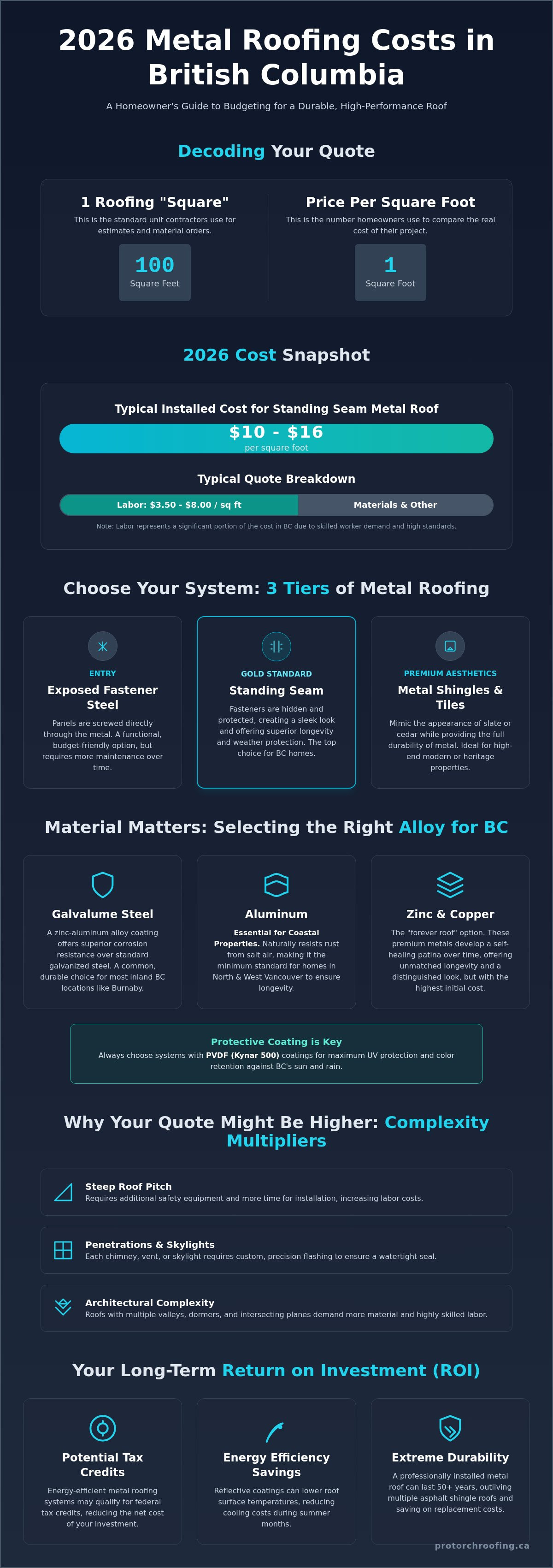
When you begin researching the 2026 market for a new roof, the first term you will likely encounter is a "square." In the roofing industry, a square represents a 100-square-foot area. While many property owners prefer to calculate the cost per square foot for metal roofing BC projects require, contractors use squares to standardize their estimates for materials and labor. Understanding this distinction is the first step toward decoding your quote and ensuring you aren't comparing apples to oranges.
The 2026 market in British Columbia presents a unique set of challenges compared to the rest of Canada. Our provincial building codes, updated in the spring of 2026, now enforce stricter standards for material thickness and energy efficiency. These regulations, combined with our specialized coastal environment, mean that a metal roof installed in the Lower Mainland requires higher-grade alloys than those used in the interior or the prairies. Choosing a "cheap" quote often backfires when the system fails to meet these local engineering requirements, leading to expensive retrofits or premature leaks in our heavy rain cycles.
The 2026 Price Range by System Type
The total investment for your project depends heavily on the architectural style and fastener system you select. In 2026, the market has shifted toward three primary categories:
Exposed Fastener Steel
This is the entry-level option, often used for outbuildings or simple residential slopes. It involves panels screwed directly through the metal, which requires more maintenance over time.
Standing Seam (Hidden Fastener)
This remains the gold standard for residential homes in BC. The fasteners are protected from the elements, which significantly increases the longevity and structural integrity of the system.
Metal Shingles and Tiles
These provide premium aesthetics for heritage properties or high-end modern designs, mimicking the look of slate or cedar while offering the durability of metal.
Labour vs. Material: The Cost Split in BC
Your quote is divided between material procurement and specialized labor. In 2026, global supply chains for aluminum and steel continue to fluctuate, but the most significant factor for BC homeowners is the rising cost of professional labor. Our province's high cost of living and the shortage of certified installers have pushed labor rates to a range of $3.50 to $8.00 per square foot. This rate covers the removal of old materials, the installation of high-performance underlayment, and the precision fitting of custom sheet metal components. In 2026, the market rate for a professionally installed standing seam system in British Columbia typically ranges between $10 and $16 per square foot depending on the gauge of the metal and the complexity of the structure.
Material Selection: How Steel, Aluminum, and Zinc Shift the Price
The material you select for your home does more than define its curb appeal; it determines how the system will handle the relentless moisture of the Pacific Northwest. In 2026, the cost per square foot for metal roofing BC residents invest in is primarily dictated by the specific metal alloy and its protective coating. For homeowners in Burnaby, Galvalume steel is a frequent choice. This material combines zinc and aluminum to offer superior corrosion resistance compared to traditional galvanized steel. However, the unique climate on the North Shore often requires a different approach to ensure long-term structural integrity.
Homeowners in North Vancouver and West Vancouver typically pay an aluminum premium for good reason. Salt air from the Burrard Inlet is highly corrosive to steel, even with advanced coatings. Aluminum naturally resists rust, making it the minimum standard for coastal properties. For those seeking a "forever roof," zinc and copper represent the pinnacle of architectural roofing. These metals develop a natural patina over time that heals itself from scratches and provides unmatched longevity, though they require a significantly higher initial investment than steel options.
Regardless of the metal type, the quality of the finish is vital for protecting your investment. We recommend systems utilizing PVDF (Kynar 500) coatings. This resin-based finish provides the highest level of UV protection and color retention. It ensures your roof doesn't fade under the summer sun or peel during the rainy season, maintaining both its beauty and its protective seal for decades.
Coastal vs. Inland: The Salt Air Multiplier
Proximity to the ocean is a critical factor that many general contractors overlook. If your property is within a few kilometers of the salt water, your material choice is no longer optional. Most steel manufacturers will actually void their warranties if the product is installed in a coastal zone. In West Vancouver, the high moisture and salt content in the air necessitate the use of aluminum or zinc to prevent edge creep and structural failure. Investing in the correct material now prevents a total system replacement in ten years. If you are unsure which material best suits your local micro-climate, you can always request a professional assessment to determine the most secure path forward.
Custom Sheet Metal Fabrication
A metal roof is only as secure as its weakest transition. This is why we emphasize the importance of custom sheet metal fabrication. Off-the-shelf flashing and trim components often fail to provide a watertight seal in the intense BC rain. By utilizing bespoke flashing that is tailored to your roof’s specific valleys and penetrations, you ensure superior waterproofing. Local fabrication also reduces lead times and shipping costs, allowing for a more efficient installation process. Integrating custom metal details is the best way to safeguard the structural health of your home against the specific weather patterns of the Lower Mainland.
Complexity Multipliers: Why Your Quote Might Be Higher
While base material prices provide a starting point, the specific architecture of your home often dictates the final investment. A standard cost per square foot for metal roofing BC contractors quote usually assumes a simple gable roof with a manageable slope. If your home features a steep pitch, typically anything over a 6/12 slope, labor costs increase to account for specialized fall protection and slower movement. Safety is our priority. Steep-slope installations require disciplined craftsmanship to ensure every panel is secured without compromising the structural integrity of the system.
The number of penetrations on your roof also plays a significant role. Every skylight, chimney, and plumbing vent requires custom-fabricated flashing to remain watertight. These aren't just aesthetic details. They're critical junctions where the health of your home is at stake. Logistics can also impact the bottom line. Tight residential lots in Burnaby often present staging challenges for long metal panels. In contrast, spacious North Shore estates might require specialized equipment to navigate steep driveways or heavily treed perimeters. These factors influence the total labor hours required for a successful installation.
The Cedar Shake Conversion Factor
In 2026, many BC homeowners are choosing to replace aging cedar shakes with durable metal systems. This transition involves more than just a material swap. Cedar shakes are often installed over spaced lath. A metal roof typically requires a solid plywood deck for proper fastening and insulation. We must also account for the disposal fees of the old shakes. These costs have risen in the Lower Mainland due to stricter recycling regulations. Ensuring your roof deck is reinforced and properly prepared is essential for the long-term safety of the new system.
Ventilation and Underlayment
The Pacific Northwest climate demands a robust approach to moisture management. High-temperature underlayment is a non-negotiable component for any metal roof in BC. Because metal panels can reach high temperatures in the summer, standard underlayments can degrade or even stick to the metal. This leads to failure. Proper ventilation is equally vital. Without specialized ridge vents or custom metal venting systems, trapped heat can lead to "attic rain" where condensation drips onto your ceiling. Investing in a high-quality breathable system ensures your home remains dry and secure through every season.
The ROI Calculation: Taxes, Energy, and Insurance in BC
Evaluating the total investment requires looking beyond the initial invoice. In 2026, the cost per square foot for metal roofing BC homeowners pay is offset by several long-term financial benefits. First, it's vital to understand the tax implications. In British Columbia, roofing is considered a real property improvement. This means you typically pay 5% GST on the total contract, while the PST is often handled by the contractor at the material procurement stage. Beyond taxes, the energy savings are substantial. Metal roofs can reflect up to 70% of solar radiation, which significantly lowers cooling costs during our increasingly warm BC summers.
Insurance providers in our province are also taking note of material durability. Many BC insurers offer premium discounts for homes with fire-rated metal systems, especially in areas where wildfire risk is a growing concern. Looking at resale value, a professionally installed metal roof is a major selling point. It provides potential buyers with the security of knowing they won't face a major capital expenditure for decades. This allows you to recoup a high percentage of your installation costs upon sale.
Longevity vs. Shingles: The 50-Year Math
While asphalt shingles remain popular, they typically only last 15 to 20 years in our wet climate. Metal systems are designed to last 50 years or more with minimal roof maintenance. While the initial investment is higher, a single metal roof typically costs significantly less over 50 years than paying for three separate asphalt replacements and the associated labor inflation. This long-term perspective is why disciplined property owners view metal as the superior choice for structural health and financial predictability.
BC Building Code and Permits
Regulatory compliance is another area where local expertise is essential. Municipalities like Vancouver, Burnaby, and North Vancouver have specific bylaw requirements regarding fire ratings and material weights. The 2026 updates to the BC Building Code also emphasize energy efficiency and the BC Step Code. Your contractor must ensure the installation meets these evolving standards to avoid permit delays or compliance issues. If you're ready to secure your property with a system that meets all local standards, you can get a professional assessment from our team today.
Hiring a Specialist: The Pro Torch Advantage for BC Roofs
Hiring a specialist isn't just about finding someone to swing a hammer; it's about finding a partner who understands the specific engineering demands of the West Coast. In 2026, the cost per square foot for metal roofing BC property owners invest in must include the value of local expertise. A general contractor might understand the basics of panel installation, but a dedicated specialist ensures that every perimeter flashing and SBS membrane transition is executed with precision. For over 25 years, our team has focused on protecting properties in the Lower Mainland, prioritizing the long-term health of the building over quick, high-pressure sales.
A professional metal roofing bid in 2026 should be transparent and comprehensive. It shouldn't just list a single number. Instead, it should detail the material gauge, the specific underlayment type, and the custom fabrication requirements we discussed in previous sections. This level of detail provides you with immediate confidence that your investment is being handled with a disciplined, methodical approach. When you see a breakdown of labor, materials, and specialized components, you can be certain there are no hidden costs waiting to surface halfway through the project.
Handling Complex Transitions
Modern architectural designs in Vancouver and Burnaby often feature a mix of roof styles. We frequently see homes that combine steep metal slopes with flat sections that require specialized commercial roofing applications. This is where the synergy of torch-on roofing and custom sheet metal becomes essential. If the interface between these two systems isn't managed correctly, it creates a significant vulnerability for water ingress during heavy rain cycles. As a family-owned, Burnaby-based business, we take pride in our ability to engineer these complex transitions, ensuring a seamless waterproof seal that stands up to our unique weather patterns.
Next Steps for Your Property
The first step toward securing your home is a detailed site assessment. This allows us to evaluate the specific complexity multipliers of your property, from roof pitch to the condition of the underlying deck. Preparing your property for a 2026 installation involves clearing access for our crews and ensuring any existing structural issues are addressed before the metal panels arrive. We're committed to quality and transparent communication throughout every stage of the project. If you're ready to move forward with a durable, high-performance system, we invite you to request a professional metal roofing quote from Pro Torch Roofing today.
Securing Your Home’s Future with Professional Metal Solutions
Protecting your property against the unique British Columbia climate is a significant decision that requires technical knowledge and a long-term perspective. We have explored how the cost per square foot for metal roofing BC homeowners invest in is influenced by material grades, coastal proximity, and the intricate details of custom sheet metal fabrication. Choosing the right system means balancing immediate installation costs with the decades of security and energy efficiency a high-performance roof provides.
As a family-owned business based in Burnaby with over 25 years of experience, we specialize in the complex transitions between sloped metal and torch-on systems. We prioritize transparent communication and disciplined craftsmanship to ensure your home remains dry and structurally sound. Whether you are converting from cedar shakes or upgrading a modern estate, our team is here to provide a methodical assessment tailored to your local micro-climate.
Get a Transparent Metal Roofing Quote for Your BC Home
Investing in quality protection today ensures your peace of mind for the next fifty years.
Frequently Asked Questions
Is metal roofing more expensive than asphalt shingles in BC?
Metal roofing requires a higher initial investment than asphalt shingles, but it offers a much lower lifecycle cost. While you might replace an asphalt roof two or three times over fifty years, a metal system is designed to last a lifetime. The long-term savings on maintenance, energy bills, and potential insurance discounts often justify the upfront premium for property owners seeking permanent structural security and peace of mind.
How much does a metal roof cost for a 2000 sq ft house in Vancouver?
The total investment for a 2,000-square-foot home typically ranges between $24,000 and $52,000 in 2026. This variation reflects the specific cost per square foot for metal roofing BC homeowners encounter when choosing between basic corrugated panels and premium standing seam systems. Factors like the number of skylights and the steepness of your roof will also influence the final quote provided by your local roofing specialist.
Does a metal roof increase home insurance costs in British Columbia?
Installing a metal roof can actually lower your home insurance premiums in British Columbia. Many providers offer discounts because metal is a fire-rated material that provides superior protection against wind and impact damage. Because these systems are less likely to leak or suffer catastrophic failure during storms, insurers view the property as a lower risk, which can lead to significant annual savings on your policy coverage.
What is the best metal for a house near the ocean in West Vancouver?
Aluminum is the superior choice for coastal properties in West Vancouver because it naturally resists salt air corrosion. While steel systems are durable inland, the Burrard Inlet's moisture can cause edge creep and rust on steel panels over time. For a permanent solution, architectural metals like zinc or copper offer the highest level of protection, though they represent a larger initial investment than aluminum or galvanized steel options.
Can I install a metal roof over my existing shingles to save on cost?
While building codes may allow for a layover installation, we don't recommend it for the long-term health of your home. Installing metal over old shingles can trap heat and moisture, which may lead to deck rot or the premature failure of the metal's protective coating. A full tear-off allows our team to inspect the structural integrity of your roof deck and install the required high-temperature underlayment correctly.
Are metal roofs noisy during heavy Vancouver rainstorms?
Modern metal roofs are remarkably quiet during our heavy coastal rainstorms. Unlike a thin metal shed, a residential installation includes a solid roof deck, high-grade underlayment, and attic insulation that dampen sound effectively. Most homeowners find that a professionally installed system is no louder than traditional asphalt shingles, providing a secure and peaceful environment even during the most intense weather patterns in the Lower Mainland.
How long does a metal roof installation take in the Lower Mainland?
A standard residential installation in the Lower Mainland usually requires 7 to 14 days of active work. This timeline accounts for the precision required in custom sheet metal fabrication and the careful fitting of hidden fasteners. While our rainy climate can occasionally cause delays for safety reasons, a disciplined crew will focus on keeping your home dry and waterproofed throughout every stage of the material transition.
Do I pay PST on a new metal roof installation in BC?
In British Columbia, roofing installations are treated as real property contracts. You generally don't see PST as a separate line item on your final bill because the contractor is responsible for paying PST on the materials they purchase. As the property owner, you'll pay the 5% GST on the total contract price, which covers both the specialized labor and the custom-fabricated metal components used for your project.
