

Emergency Roof Repair in Vancouver & Burnaby: A Rapid Response Guide (2026)
Imagine it is 2:00 AM on a Tuesday in November, and the relentless Vancouver rain isn't just hitting your shingles; it is dripping onto your hardwood floor. You know that every minute the water flows, your repair costs climb and the risk to your SBS membranes or perimeter flashing increases. It is a stressful moment that requires a methodical response rather than panic. We understand that your priority is protecting your family and your investment from the C$5,000 or more in secondary damage that a single major leak can cause in a standard Burnaby home.
This guide provides the immediate steps you need to take to stop water ingress and manage an emergency roof repair without the typical high-pressure sales tactics. You'll learn how to secure your property, document damage for insurance, and find a disciplined local expert who prioritizes long-term craftsmanship over quick fixes. We will cover everything from temporary tarping techniques to the technical benefits of torch-on systems for permanent peace of mind in the Pacific Northwest.
Key Takeaways
• Prioritize immediate safety by staying off the roof during active storms and containing interior leaks with buckets to protect your flooring.
• Learn the correct method for securing a waterproof tarp over the roof ridge to provide temporary protection once the weather permits.
• Understand how to distinguish between minor shingle loss and critical structural failures that require immediate professional emergency roof repair.
• Navigate BC insurance claims more effectively by documenting damage according to local "sudden and accidental" policy requirements.
• Discover why specialized torch-on systems and SBS membranes provide the most reliable long-term protection for flat roofs in the Lower Mainland.
Immediate Steps to Take During a Roofing Emergency in Vancouver
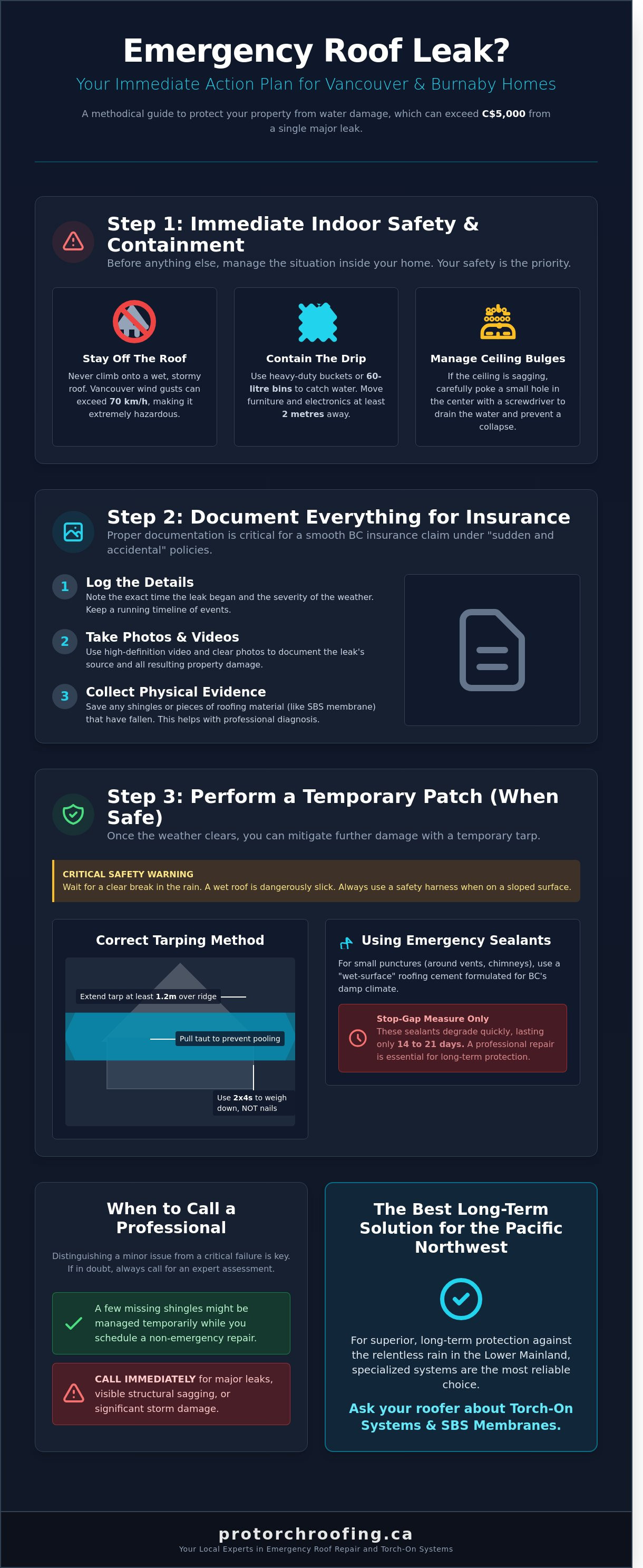
When a sudden storm hits the Lower Mainland, your primary objective is safety. Never attempt to climb onto a roof during active rain or high winds. Vancouver wind gusts often exceed 70 km/h during November atmospheric rivers, making a wet surface incredibly hazardous. You should focus on containing the water from inside the building. Place heavy-duty buckets or 60-litre bins under active leaks to prevent water from saturating your flooring or subfloor. Move any electronics, furniture, or valuables at least 2 metres away from the drip zone to prevent secondary property loss.
If you notice your ceiling is sagging or bubbling, water is likely pooling behind the drywall. Use a screwdriver to carefully poke a small hole in the center of the bulge. This allows the water to drain into a bucket in a controlled manner. Taking this step prevents a sudden, heavy ceiling collapse that could cause significant structural damage. Once the immediate interior threat is managed, contact a Burnaby-based professional. Understanding what roofers do during an emergency roof repair involves more than a temporary patch; it requires a disciplined assessment of your perimeter flashing and membrane integrity to ensure long-term security.
Protecting Your Home Interior
Cover large furniture items with 4-mil plastic sheeting if they are too heavy to move. Check your attic immediately with a high-lumen flashlight to locate the specific entry point. Water often travels along rafters before dripping, so the leak's origin might be 3 metres away from where it hits the ceiling. Monitor your electrical fixtures closely. If water is within 30 centimetres of light switches or outlets, shut off the power at the main breaker to prevent electrical fires.
Initial Damage Documentation
Start a detailed log for your insurance provider. Note the exact time the leak began and the severity of the weather conditions. Take clear photos and high-definition videos of the leak source and any resulting property damage. Save any shingles or pieces of SBS membrane that have fallen into your yard. Having this physical evidence helps your roofer diagnose whether the failure occurred in the field membrane or the flashing details during the emergency roof repair process.
How to Perform a Temporary Emergency Roof Patch
Safety is the primary concern when dealing with a compromised structure. Vancouver weather is notoriously unpredictable, so you must wait for a clear break in the rain before attempting any exterior work. Even a light mist makes shingles dangerously slick. Once conditions are stable, your immediate goal is to mitigate water ingress until a professional emergency roof repair can be completed by a certified technician.
Begin by securing a heavy-duty waterproof tarp. It's vital that the tarp is large enough to extend over the roof ridge by at least 1.2 metres to prevent water from running underneath the plastic. Rather than nailing directly into your shingles, which creates new leak points, use 2x4 wooden strips to weigh the tarp down. This method secures the material without compromising the structural integrity of your existing roof deck. You should also inspect the perimeter flashing for obvious gaps or bent metal that can be temporarily sealed to prevent wind-driven rain from entering the building envelope.
• Identify the leak source from the attic first to minimize time spent on the roof.
• Clear away branches or debris that could puncture your temporary patch.
• Use 75mm screws to secure 2x4 boards into the roof rafters where possible.
Tarping Your Roof Safely
Ensure the tarp is pulled taut across the affected area. This prevents water from pooling in the plastic, which can lead to a sudden weight-related collapse or further leaks. You must always tuck the top edge of the tarp under the shingles at the peak to prevent seepage from gravity. Always use a safety harness when working on a sloped surface. Statistics from WorkSafeBC indicate that falls from heights remain a leading cause of injury, so never bypass this step for a quick fix.
Using Emergency Sealants
Select a "wet-surface" roofing cement specifically formulated for the damp British Columbia climate. These products are designed to bond to SBS membranes and asphalt even when the surface is fully saturated. Apply the sealant with a 10cm putty knife around vents, chimney bases, or small punctures. Remember that these are stop-gap measures. Most temporary sealants won't last more than 14 to 21 days before the adhesive begins to degrade. For a durable fix that protects your property's longevity, it's best to request a professional assessment from a local expert who understands regional building codes.
Identifying Critical Damage: When to Call for Emergency Repairs
Homeowners often struggle to distinguish between a cosmetic issue and a structural crisis. In the Lower Mainland, where we face 160 or more rainy days annually, waiting just 24 hours can turn a minor leak into a C$5,000 interior restoration bill. You need an emergency roof repair when the building's envelope is compromised or structural integrity is at risk. Minor shingle loss might wait for a scheduled appointment, but structural sagging or active internal flooding requires immediate professional intervention to protect your property.
Flat Roof & Torch-On Vulnerabilities
Flat roofs in Vancouver and Burnaby face specific pressures during the wet season. Look for "alligatoring" or deep cracks in the bitumen surface. This signifies that the SBS membrane has become brittle and is no longer shedding water. "Ponding" water is another major red flag. A single centimetre of water weighs approximately 10 kilograms per square metre. If your drains are blocked, this weight can lead to deck deflection or even a total collapse. Repairing these systems isn't a DIY job; it requires specialized heat-welding equipment and certified technicians to ensure the new membrane fuses correctly with the existing substrate.
Shingle and Metal Roof Warning Signs
High-wind events in North Vancouver often reach speeds of 70 to 90 km/h, creating a "sail effect" on loose metal panels. If you see bent or lifted panels, the wind can easily rip them off, exposing the underlayment. For asphalt shingles, look for "missing teeth" or large gaps in the layout after a storm. It's also vital to check your gutters. If you find more than two cups of granules after a heavy downpour, your shingles have likely reached the end of their 15 to 20 year lifespan. Wind-driven rain often bypasses standard perimeter flashing if it hasn't been sealed to local standards, allowing water to saturate your fascia boards and interior drywall quickly. When water is actively entering the living space, you must call for an emergency roof repair to mitigate further damage.
Structural Failure
Look for sagging rooflines or interior ceiling cracks.
SBS Punctures
Check for tears in commercial torch-on systems caused by fallen debris.
Flashing Gaps
Identify where metal meets the chimney or walls; these are primary entry points for water.
Navigating Insurance and Documentation for Vancouver Roof Claims
Managing an insurance claim after a storm requires a methodical approach to ensure you receive full coverage for your emergency roof repair. Most BC property insurance policies focus on "sudden and accidental" damage. This includes impacts from fallen trees or wind-driven rain that breaches your SBS membrane. It does not typically cover long-term neglect. You must distinguish between emergency mitigation, which stops the immediate leak, and permanent restoration, which returns the structure to its original state. Local Burnaby roofers provide more accurate estimates because they understand the current C$ labor rates and material costs specific to the Lower Mainland in 2026.
Watch out for "storm chasers" who travel to British Columbia after significant weather events. These out-of-province contractors often lack specialized knowledge of coastal waterproofing and may disappear before the work is finished. Trusting a local expert ensures your documentation is thorough and your warranty remains valid. We prioritize transparent communication to help you secure the funds needed for a high-quality, long-lasting fix.
Working with Your Insurance Adjuster
• Provide the adjuster with a professional damage report including high-resolution photos of damaged perimeter flashing or punctured membranes.
• Clarify if your policy pays out "Actual Cash Value," which accounts for depreciation, or "Replacement Cost," which covers the full price of new materials.
• Request that your roofer be present during the adjuster's inspection to point out technical structural issues that a general adjuster might miss.
Having a technical expert on-site can result in a C$3,000 to C$7,000 difference in your settlement by identifying hidden moisture trapped beneath the roof surface.
Local Permits and Building Codes
The City of Burnaby requires specific building permits for any repair that involves structural components or a full surface replacement. All work must align with the 2024 BC Building Code, which mandates specific wind uplift resistance for coastal zones. ProTorch Roofing ensures every emergency roof repair follows these regulations. We document that all custom sheet metal work meets local standards for drainage and thermal expansion. This level of detail protects your property's structural integrity and future resale value.
Don't let insurance paperwork delay your protection. Contact ProTorch Roofing for a professional assessment and expert guidance through your claim process.
Pro Torch Roofing: Reliable Emergency Support in the Lower Mainland
Pro Torch Roofing has defended Lower Mainland properties against aggressive coastal weather since 1999. With over 25 years of experience, we've managed the most severe roofing crises Vancouver and Burnaby have faced. We operate as a family-owned business. This means we treat your home like our own during a crisis, focusing on security rather than high-pressure sales. Our expertise covers specialized torch-on roofing and custom sheet metal fabrication. We don't just apply a temporary fix. Our team ensures a seamless transition from an emergency roof repair patch to a complete, long-term structural restoration that protects your investment.
Our Rapid Response Process
Our Burnaby-based team mobilizes quickly across the Greater Vancouver area to address urgent leaks. We maintain a disciplined, methodical approach to every call. You'll receive a transparent, no-pressure assessment that explains the technical remedy in plain language. A key advantage of our service is our dedicated in-house shop. We create custom flashing that solves complex leaks other contractors often miss. This precision engineering ensures your perimeter flashing and roof junctions remain watertight under the heaviest BC rains. We arrive prepared to secure your building immediately, providing the professional craftsmanship your property deserves.
Long-Term Protection and Maintenance
A quick response saves your interior, but long-term protection requires superior materials. We utilize high-quality SBS membranes and durable asphalt shingles to reinforce your home's structural integrity. Our preventative maintenance plans are built to stop an emergency roof repair before it's ever needed. Data shows that regular professional inspections can catch 95% of potential failure points before they become active leaks. These proactive measures can extend your roof's functional lifespan by 10 years or more. Don't wait for the next storm to test your shingles. Protect your property today—Contact Pro Torch Roofing for an assessment to ensure your peace of mind and long-term security.
Secure Your Home Against the Next Vancouver Storm
When a leak breaches your ceiling or storm damage exposes your structure, timing determines the total recovery costs for your property. You've learned how to mitigate water intrusion with temporary patches and why documenting every detail is vital for your insurance claim. Acting within the first 24 hours of a leak can prevent a minor drip from turning into a C$5,000 interior restoration project. Recognizing the difference between surface wear and structural failure ensures you prioritize the safety of your family or tenants.
Professional emergency roof repair requires more than just a quick fix; it demands technical precision to protect your property's long-term structural integrity. Pro Torch Roofing brings 25 years of local Lower Mainland experience to every site. As a family-owned business based in Burnaby, we specialize in high-performance torch-on systems and custom metal work designed for the specific demands of the BC climate. We focus on disciplined craftsmanship that restores your security without the stress of high-pressure sales tactics.
Get Immediate Help: Call Pro Torch Roofing for Emergency Repairs
Don't let a roofing crisis compromise your peace of mind when expert help is just a phone call away.
Frequently Asked Questions
Is a roof leak considered an emergency?
A roof leak is an emergency if water enters your living space or threatens your electrical system. Active leaks can cause mold growth within 24 to 48 hours, so immediate action is vital to protect your structural integrity. If you see water dripping near light fixtures or notice sagging in your ceiling, you should call for professional assistance right away to prevent a total ceiling collapse.
How much does emergency roof repair cost in Vancouver?
Emergency roof repair in Vancouver typically costs between C$350 and C$1,200 for the initial call-out and temporary stabilization. This price includes the labor for two technicians and basic materials like heavy-duty tarps or specialized sealants. For complex issues on torch-on systems, costs can rise depending on the time of night and the specific materials required to secure the perimeter flashing or SBS membranes.
Can you repair a roof while it is still raining?
We can't apply permanent torch-on SBS membranes during a downpour, but we perform emergency roof repair by installing waterproof tarps or temporary cold-patch sealants. These rapid response measures stop active water ingress and protect your home's interior until the weather dries out. Our crews use specialized safety harnesses to work in wet conditions, ensuring your property is secured within 3 hours of our arrival.
How long does a temporary roof tarp last?
A professionally installed 12-mil polyethylene tarp typically lasts between 30 and 90 days in the Lower Mainland's climate. While it's a durable short-term solution, it isn't designed to withstand the 90 kilometer per hour wind gusts common during Vancouver winters. You should schedule a permanent repair as soon as the weather allows to ensure the long-term health of your roof's structural integrity and insulation.
What should I do if my flat roof is ponding water?
If you notice water deeper than 25 millimeters that doesn't drain within 48 hours, you must clear your drains immediately. Standing water adds roughly 1,000 kilograms of weight for every cubic meter, which puts immense pressure on your SBS membranes. If clearing the debris doesn't solve the issue, a professional needs to inspect your perimeter flashing and drain sumps to prevent a structural failure or major leak.
Will my insurance cover the cost of emergency repairs?
Most BC homeowners' policies cover emergency roof repair if the damage results from a sudden, accidental event like a fallen tree or a windstorm. You'll typically be responsible for a deductible ranging from C$500 to C$1,000, but the insurance company often pays for the mitigation efforts to prevent further internal damage. Always take photos of the damage and keep your receipts to ensure a smooth claims process.
How do I find a reliable emergency roofer in Burnaby?
Look for a local contractor with a valid Burnaby business license and at least C$5 million in liability insurance. A reliable expert should provide a clear written estimate and show proof of WorkSafeBC coverage for their crew. Check for specialized experience in torch-on systems if you have a flat roof, as these require specific technical skills and safety certifications to repair correctly under emergency conditions.
What is the most common cause of roof failure in the Lower Mainland?
The combination of 1,100 millimeters of annual rainfall and frequent freeze-thaw cycles causes 75 percent of roof failures in our region. These temperature shifts cause materials to expand and contract, which eventually cracks older SBS membranes and pulls perimeter flashing away from the walls. Regular maintenance every October can identify these small cracks before they turn into costly emergencies during a December rainstorm.
