

Roof Ventilation in Vancouver: A Homeowner’s Guide to Protecting Your Investment (2026)
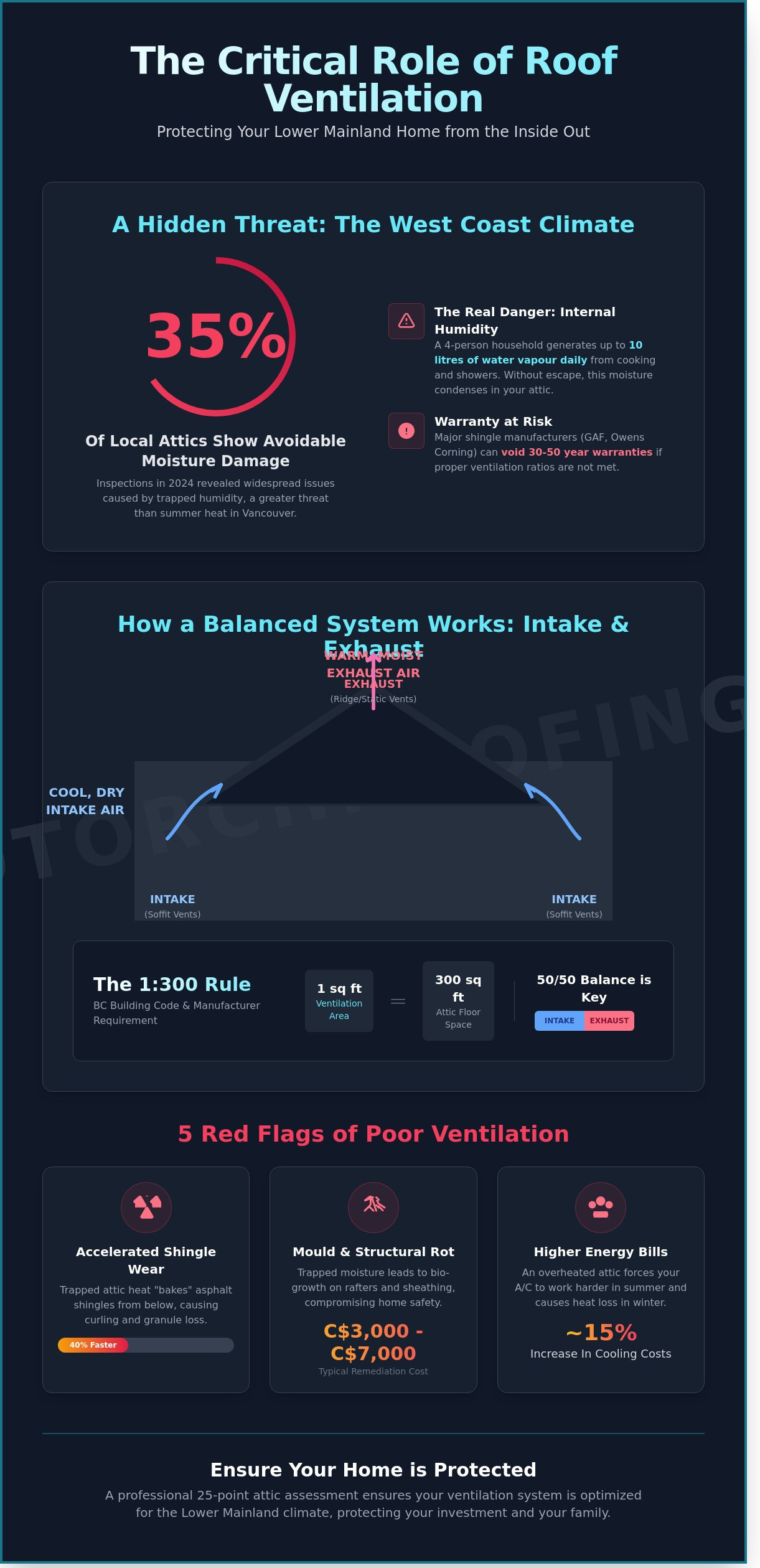
In 2024, local property inspections revealed that nearly 35% of residential attics in the Lower Mainland showed signs of moisture damage that could've been avoided. You've likely felt the frustration of rising energy bills or the worry that comes with hearing conflicting advice from different contractors about how to keep your home dry. We understand that your priority is protecting your family and your largest financial investment from the damp West Coast climate.
Effective roof ventilation is about more than just simple airflow; it's a critical component of your home's structural integrity and long term health. This guide will show you how a properly balanced system prevents attic mould, lowers cooling costs by roughly 15% during summer heatwaves, and ensures full compliance with the latest BC Building Code updates. We'll walk through the technical requirements for SBS membranes and torch-on systems, providing the clarity you need to make an informed decision for your property.
Key Takeaways
• Learn why managing humidity is more critical than heat for Vancouver homes and how a balanced system preserves your roof’s structural integrity.
• Master the mechanics of roof ventilation by understanding how intake and exhaust vents work together to create a continuous, protective airflow.
• Discover the specific ventilation requirements for flat and torch-on roofing systems to prevent hidden condensation and protect your SBS membranes.
• Identify five visual and thermal red flags-from shingle damage to upper-floor temperature spikes-that indicate your Burnaby home is at risk.
• Understand the value of a professional 25-point attic assessment to ensure your West Vancouver property is fully optimized for the unique Lower Mainland climate.
What is Roof Ventilation and Why is it Critical for Vancouver Homes?
For homeowners in Burnaby and across the Lower Mainland, a roof is more than just a waterproof lid. It is a complex, dynamic system designed to manage the environmental stresses unique to the Pacific Northwest. At its core, roof ventilation is a balanced system of intake and exhaust vents that allows air to circulate through the attic space. This process relies on Architectural ventilation principles to ensure that fresh, cooler air enters through the soffits while warm, moist air exits through the ridges or roof vents. Without this continuous cycle, your home effectively traps pollutants and moisture, leading to premature structural failure.
In Vancouver, we often focus on the 160 plus days of rain we receive annually. While keeping liquid water out is the primary job of your shingles or SBS membranes, managing internal humidity is equally vital. Vancouver roofs face a greater threat from internal moisture than from the summer heat. When we don't allow the attic to breathe, it becomes a reservoir for humidity. This acts as a breathable barrier for your home. It ensures that the structural components, such as your rafters and plywood sheathing, remain dry and stable despite the external dampness.
Proper airflow also dictates the validity of your manufacturer's protection. Most major shingle manufacturers, including GAF and Owens Corning, require a strict 1:300 ventilation ratio to honor their 30-year or 50-year warranties. If a roof fails because it was "baked" from the inside out due to poor airflow, the manufacturer may deny the claim. Pro Torch Roofing views this balance as the foundation of any 2026 roof installation, ensuring your investment is protected by both craftsmanship and legal coverage.
The Role of Airflow in a Damp Climate
Roof ventilation is a pressure-balanced system that regulates both temperature and moisture. In our region, warm indoor air from showers and cooking meets the cold Vancouver night air on the underside of your roof deck. This creates condensation. A four-person household can generate up to 10 litres of water vapour daily. If this moisture isn't evacuated, it leads to mould and mildew. Poor ventilation is the #1 cause of attic bio-growth in the Lower Mainland, often requiring C$3,000 to C$7,000 in remediation costs.
Protecting Your Roof Investment
The life of your shingles depends on effective roof ventilation. Without it, heat builds up in the attic and "cooks" the asphalt shingles from beneath, causing them to curl and lose granules 40% faster than intended. This heat also causes structural rot in rafters and plywood sheathing, compromising the safety of your home. We prioritize these systems to provide peace of mind. Every assessment we conduct includes a detailed check of intake and exhaust balance to prevent these hidden dangers from eroding your property value.
The Mechanics of Attic Airflow: Intake vs. Exhaust
Effective roof ventilation relies on a simple scientific principle called thermal buoyancy. Warm air is less dense than cool air, so it naturally rises. In a Burnaby home, this warm, moist air collects at the highest point of your attic space. By understanding building enclosure science, we can harness this natural movement to create a continuous cycle of fresh air. Intake vents located at the eaves pull in cool, dry air, while exhaust vents at the ridge allow the stale, heated air to escape. This constant flow prevents heat buildup that can bake your shingles and degrade your roof's structural integrity over time.
Precision matters when calculating airflow requirements for your property. Most residential projects in British Columbia follow the 1/300 rule. This standard requires 1 square foot of net free area (NFA) for every 300 square feet of attic floor space. For a 1,500 square foot attic, you need exactly 5 square feet of total ventilation. We divide this amount equally between intake and exhaust to ensure the system operates under neutral pressure. If your attic lacks this balance, you're likely shortening the lifespan of your SBS membranes or asphalt shingles by several years.
Common Types of Roof Vents
Soffit vents act as the intake source, or the "lungs," of the system. They're installed under the eaves and must remain completely unobstructed by attic insulation to function. For the exhaust side, ridge vents are often the most efficient choice for Burnaby's shingle roofs. They provide continuous airflow along the entire peak of the home. Static box vents or wind-driven whirlybirds offer alternative solutions. Whirlybirds use a turbine design to pull air out actively when the wind blows at speeds as low as 8 kilometres per hour, making them effective for older homes with limited ridge space.
Achieving a Balanced System
A common mistake in local home maintenance is installing too much exhaust without enough intake. This creates a vacuum effect that pulls conditioned air from your bedrooms or living room into the attic. This imbalance can increase your BC Hydro bill by 15% during peak summer months. You should also avoid mixing different exhaust types, such as combining a ridge vent with a powered fan on the same roof line. This often causes "short-circuiting," where the fan pulls air from the ridge vent instead of the soffits, leaving the lower sections of the attic stagnant and prone to moisture.
Following Section 9.19.1.1 of the BC Building Code ensures your home stays protected and compliant with provincial standards. These regulations exist to prevent the structural rot and mould growth that thrive in our damp coastal climate. If you're unsure about your current setup, a professional attic assessment can identify these hidden imbalances before they lead to costly repairs. Our team focuses on creating a methodical airflow plan that protects your investment and ensures the long-term health of your roofing system.
Ventilation Challenges for Flat and Torch-On Roofs
A common misconception persists among Burnaby property owners that flat roofs don't require airflow. This mistake often leads to premature membrane failure and costly interior damage. While sloped roofs use large attic volumes to move air, flat or low-slope systems must utilize tighter, more strategic pathways. In "hot roof" designs, insulation sits directly against the roof deck, theoretically eliminating the need for a cavity. However, in our humid coastal climate, traditional ventilated designs remain the gold standard for longevity. We've seen unventilated systems fail 7 to 10 years earlier than those with proper air movement.
Effective roof ventilation in a flat system often relies on "sleepers." These are structural spacers that create a 38mm to 89mm gap between the ceiling joists and the roof deck. This narrow plenum allows air to circulate, preventing heat from baking the SBS membrane from below. Without this gap, temperatures on a torch-on surface can exceed 70 degrees Celsius in July. This extreme heat causes the bitumen to degrade 15% faster than properly cooled systems. Our team ensures these sleepers are positioned to allow cross-ventilation, which is a detail often missed by general contractors.
Pro Torch specializes in custom sheet metal solutions because "off-the-shelf" products rarely meet the specific drainage and airflow requirements of a complex torch-on system. We prioritize the structural integrity of your property by ensuring every vent is a fortress against the elements. Common challenges we solve with custom flat roof venting include:
• Eliminating "blistering" in SBS membranes caused by trapped air pockets.
• Reducing the risk of ice damming at the roof edges during rare Burnaby cold snaps.
• Preventing the saturation of fiberglass or polyiso insulation boards.
• Protecting the roof deck from rot caused by stagnant, humid air.
Ventilating Torch-On Systems in the Lower Mainland
Managing moisture trapped between the ceiling and the SBS membrane is critical. We frequently encounter 30-year-old commercial buildings in Vancouver where the lack of perimeter flashing vents has led to structural wood rot. Pro Torch installs custom-fabricated metal vents that integrate with the torch-on layers. According to Attic Ventilation 101, maintaining balanced airflow is essential for preventing condensation that compromises the building envelope. We use 26-gauge galvanized steel to ensure these vents withstand our coastal climate.
Flat Roof vs. Sloped Roof Needs
Flat roofs lack the natural "stack effect" where warm air rises to a high ridge. They require proactive moisture management to combat the 1,180mm of average annual rainfall in the Lower Mainland. In 2022, we helped a Burnaby client whose flat roof suffered from chronic condensation. By installing 12 custom breather vents, we increased roof ventilation capacity by 35% and lowered deck temperatures by 8 degrees Celsius. Our custom shop fabricates components that fit the unique geometry of your roof, providing protection standard parts cannot match.
5 Signs Your Burnaby Home Has Poor Roof Ventilation
Identifying a failure in your roof's breathing system early can prevent structural decay that often costs Burnaby homeowners between C$5,000 and C$15,000 in avoidable repairs. Because the Lower Mainland receives over 1,150mm of annual rainfall, moisture management is the primary factor in your home's longevity. When roof ventilation is inadequate, your attic traps heat and damp air, leading to a cascade of issues that compromise your SBS membranes or asphalt shingles. You don't need to be a professional contractor to spot the red flags; you simply need to know where the system typically fails.
Temperature spikes remain the most common complaint we hear from local residents. If your upper floor feels like a sauna during a typical 25°C July day in Burnaby, your attic is likely reaching temperatures upwards of 65°C. This trapped heat radiates downward through your ceiling, forcing your air conditioning unit to work 30% harder than necessary. Stagnant air also leads to musty odours. These smells are often the first sign that mould is colonizing your plywood decking, a process that can necessitate a full remediation project costing thousands of dollars if left ignored for even one season.
The Attic Inspection Checklist
Grab a flashlight and head into your attic to look for "rust" on roofing nails. If the tips of the nails protruding through the deck are orange or crumbling, your attic humidity is consistently exceeding 60%. You should also check the perimeter for compressed or damp insulation. When insulation is wet, it loses its R-value and can no longer protect your home's thermal envelope. Finally, observe your roof after a light frost or light snow. If you see "hot spots" where the frost has melted in irregular patches while the rest of the roof stays white, heat is escaping unevenly due to poor airflow.
Exterior Warning Signs
Your shingles often tell the story of what is happening underneath them. Excessive heat buildup causes shingles to curl or "cup" at the edges, which makes them brittle and prone to wind damage. You might also notice peeling exterior paint or siding near the roofline. This happens because trapped moisture is trying to escape through the wall cavities since it cannot exit through the ridge vents. In our damp BC climate, watch for excessive moss growth on the North side. While some moss is normal, thick carpets of it indicate that the roof surface isn't drying out, which can reduce the lifespan of your roofing material by 15% to 20%.
Winter brings its own set of warnings in the form of ice dams. While Burnaby winters are generally mild, the freeze-thaw cycles we experience in January can be devastating. When warm air stays trapped in the attic, it melts the snow on the roof. That water then runs down to the cold eaves and refreezes, creating a dam that forces water back under your shingles. If you see icicles forming along the gutters but not on your neighbours' homes, your ventilation system is failing to maintain a "cold roof" temperature. This structural imbalance puts your entire perimeter flashing and gutter system at risk of failure.
ProTorch Roofing provides the specialized regional knowledge required to balance your home's intake and exhaust systems. If you've noticed any of these red flags, you should book a professional roof assessment to protect your investment before the next rainy season begins.
Professional Ventilation Audits and Installations with Pro Torch
Relying on a generic DIY calculator to determine your home's airflow needs often leads to expensive mistakes. These online tools fail to account for the intricate architecture found in West Vancouver and Burnaby homes. A standard formula cannot consider the specific pitch of your roof, the volume of your attic space, or the presence of vaulted ceilings. At Pro Torch Roofing, we replace guesswork with a technical 25-point roof and attic assessment. This methodical process identifies dead air pockets and moisture traps that a simple calculation would overlook.
Our team integrates roof ventilation into the core of every project, whether it's a minor repair or a full replacement. We don't believe in one-size-fits-all solutions. To ensure your home remains protected, we utilize our in-house custom sheet metal fabrication. This allows us to tailor vents and perimeter flashing to the specific functional requirements and aesthetic profile of your property. By manufacturing our own components, we maintain strict quality control over the materials that safeguard your structural integrity.
Every assessment we conduct looks at the entire system as a whole. We examine intake efficiency at the soffits and exhaust capacity at the ridge. If your current setup is imbalanced, it can lead to heat exhaustion of your shingles or SBS membranes. Our goal is to create a balanced environment that extends the lifespan of your roofing materials and reduces your energy costs throughout the year.
Our Local Expertise in the Lower Mainland
We've spent 26 years navigating the unique weather patterns of the Greater Vancouver area. We understand that Burnaby receives over 1,100mm of annual precipitation, which puts immense pressure on your home's waterproofing systems. As a family-owned business, we prioritize the long-term safety of your family over a quick sale. Our professional installation ensures that every vent is properly flashed and integrated into the roof deck. This level of craftsmanship prevents the leaks and wood rot that often plague poorly executed DIY projects. We focus on building trust through transparent communication and disciplined technical execution.
Next Steps for Your Roof’s Health
Protecting your investment starts with a clear understanding of your roof's current condition. Booking a professional inspection in Burnaby or Vancouver is a straightforward process designed to provide peace of mind. During a Pro Torch service call, our experts spend 45 to 60 minutes conducting a thorough physical audit of your roof's exterior and attic interior. You can expect a transparent experience that includes:
• A comprehensive review of your current intake and exhaust levels.
• An inspection of the structural integrity of your roof deck and insulation.
• A detailed report outlining any immediate concerns or technical remedies.
• A clear, no-pressure estimate for any necessary roof ventilation upgrades.
We don't use high-pressure tactics; we provide the facts you need to make an informed decision about your home's protection. Ready to ensure your home is breathing correctly? Schedule your professional roof ventilation audit today and let our local experts secure your property for the long term.
Secure Your Vancouver Home’s Structural Integrity Today
Maintaining balanced roof ventilation isn't just a basic maintenance task; it's a critical strategy for preserving your property's value against the Lower Mainland's 1,100mm of annual rainfall. By ensuring a precise ratio of intake to exhaust airflow, you prevent trapped moisture from compromising your SBS membranes and custom sheet metal components. Whether you own a modern flat roof in Burnaby or a heritage home, identifying ventilation gaps early can save you C$10,000 or more in structural repairs and premature roof failure. Pro Torch Roofing brings 25 years of local experience to every project. As a family-owned and operated business, we focus on technical craftsmanship and transparent communication. Our team specializes in custom torch-on systems designed to withstand the specific humidity levels of British Columbia. Don't let hidden condensation undermine your safety. Protect your home from moisture-get a free roof ventilation assessment from Pro Torch Roofing. We're ready to help you build a more resilient future for your home.
Frequently Asked Questions
How much does it cost to add roof vents to an existing house in Vancouver?
Adding roof vents to an existing home in the Vancouver area typically costs between C$350 and C$900 per vent including labour and materials. For a standard 1,500 square foot home, a complete ventilation upgrade usually ranges from C$1,200 to C$3,500. These figures depend on whether you choose static box vents or solar-powered fans. ProTorch Roofing provides detailed quotes to ensure your structural integrity remains intact during the installation.
Can I install roof vents myself, or do I need a professional contractor?
You should hire a professional contractor to install roof vents to maintain your manufacturer warranty and prevent leaks. Cutting into an SBS membrane or asphalt shingle roof requires specialized tools and precise flashing techniques. Mistakes often lead to water ingress that costs over C$2,000 in interior repairs. Our team ensures every penetration is sealed according to BC building codes to protect your home from Burnaby's heavy rainfall.
Do I need more roof ventilation if I have a lot of moss growing on my roof?
Increased roof ventilation helps reduce moss growth by lowering the humidity levels in your attic and drying the roof deck faster. Moss thrives in damp, shaded environments where moisture lingers for more than 48 hours. By improving airflow, you remove the trapped heat that creates a breeding ground for spores. While ventilation isn't a total cure, it's a vital step in extending the longevity of your roofing system.
What is the difference between active and passive roof ventilation?
Passive ventilation relies on natural convection and wind to move air through ridge or soffit vents, while active ventilation uses motorized fans to pull air out. Passive systems have no moving parts and require zero electricity. Active systems, like solar-powered attic fans, can move up to 1,200 cubic feet of air per minute. We often recommend a balanced approach to ensure consistent airflow regardless of the weather conditions in Burnaby.
Will better roof ventilation actually lower my BC Hydro bill in the summer?
Improving your roof ventilation can lower your BC Hydro cooling costs by 10% to 15% during the summer months. When heat traps in your attic, temperatures can soar above 65 degrees Celsius, forcing your air conditioner to work harder. Proper airflow flushes this hot air out, reducing the thermal load on your living space. This efficiency protects your mechanical systems and keeps your monthly utility expenses more predictable.
How do I know if my soffit vents are blocked by insulation?
You can identify blocked soffit vents by entering your attic during daylight and looking for visible light at the eaves. If you don't see light, your fiberglass or cellulose insulation is likely covering the intake. Another method involves holding a smoke pen near the exterior vent to see if the air pulls inward. Blocked vents restrict the intake of fresh air, which stalls the entire circulation process.
Is it possible to over-ventilate a roof in a rainy climate like Burnaby?
It's possible to over-ventilate a roof, which can lead to negative pressure that pulls rain or snow into your attic during Burnaby windstorms. Having too many exhaust vents without enough intake creates a vacuum effect. Most BC building codes require a 1:300 ratio, meaning 1 square foot of ventilation for every 300 square feet of attic floor. We calculate these precise requirements to ensure your home stays dry and protected.
