

Strata Roof Replacement in West Vancouver: The 2026 Council Guide to Coastal Protection
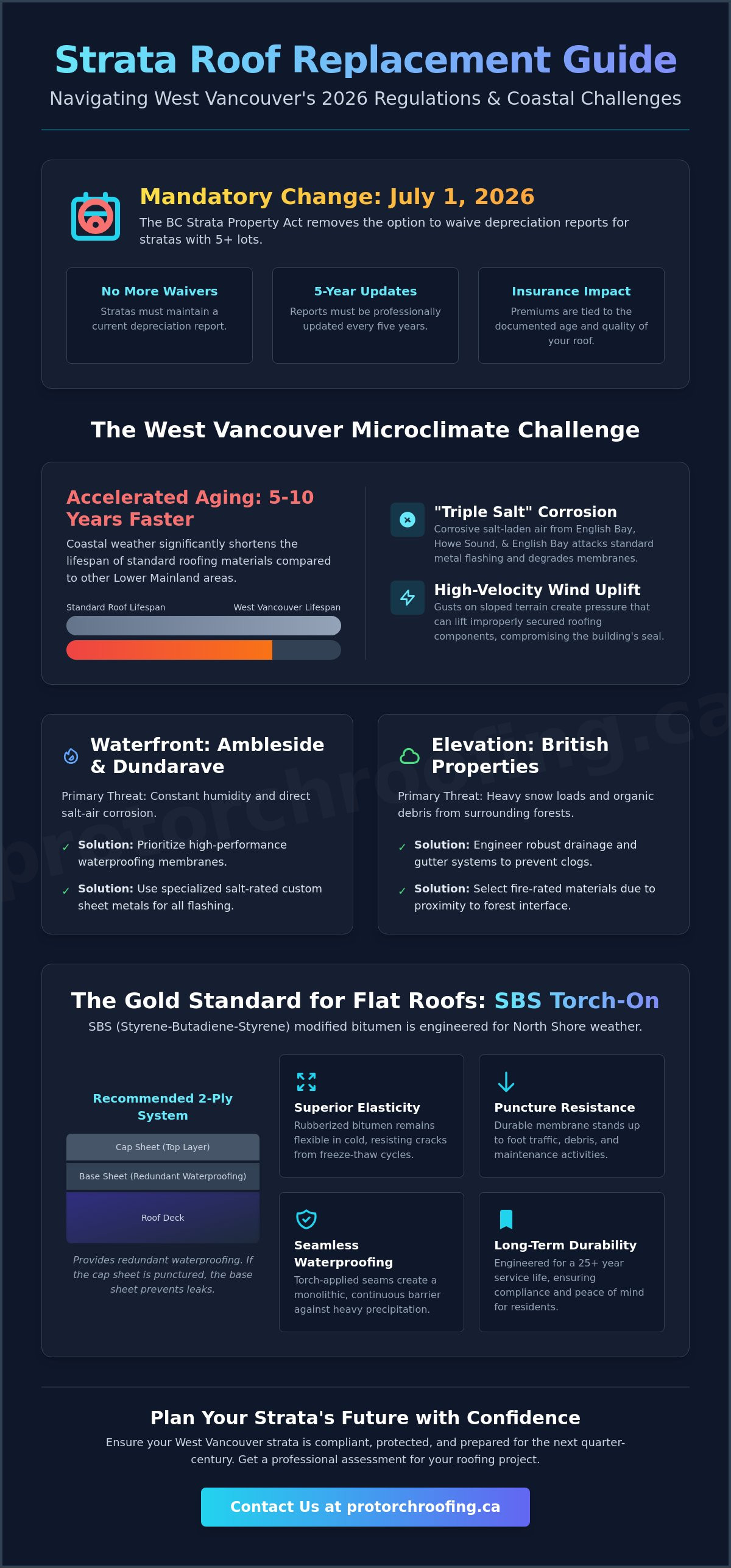
Did you know that as of July 1, 2026, the option for your strata to waive a depreciation report is officially gone? Every West Vancouver strata with five or more lots must now maintain a current report, often revealing that coastal weather has aged your roof five to ten years faster than expected. It's a stressful realization for any council member. You're balancing the need for long-term structural integrity against high construction costs and the unique "triple salt" corrosion that eats through standard flashing in our North Shore environment.
Managing a strata roof replacement West Vancouver project doesn't have to be a source of resident complaints or budget shortfalls. We understand that your goal is a leak-free building for the next quarter-century and full compliance with the BC Strata Property Act. This comprehensive guide walks you through the 2026 regulatory landscape, from updated District of West Vancouver permit fees to the selection of SBS membranes and salt-rated custom sheet metal. You'll learn how to navigate the technical demands of coastal protection while maintaining peace of mind for every homeowner in your complex.
Key Takeaways
• Learn why the West Vancouver microclimate can cause roofing materials to age five to ten years faster than Lower Mainland averages due to salt-air corrosion.
• Discover why SBS torch-on roofing systems are the gold standard for durability and waterproofing on North Shore flat-roof structures.
• Navigate the 2026 depreciation report requirements to ensure your budget for a strata roof replacement West Vancouver project stays on track.
• Get a clear roadmap for managing resident logistics, including noise and parking, to maintain community harmony during the construction phase.
• Understand the critical role of custom sheet metal in providing specialized perimeter flashing protection against harsh coastal winds.
Navigating Strata Roof Replacement in West Vancouver: 2026 Coastal Challenges
West Vancouver presents one of the most demanding environments for building envelopes in British Columbia. While many Lower Mainland communities deal with heavy rain, our stratas face a "triple salt" exposure from English Bay, Howe Sound, and English Bay. This salt-laden air acts as a corrosive agent; it attacks perimeter flashing and accelerates the degradation of roof membranes. When planning a strata roof replacement West Vancouver councils must recognize that standard building specifications often fall short of local needs. A roof designed for a landlocked suburb will likely fail prematurely here, leading to costly mid-cycle repairs and structural concerns.
Wind uplift is another critical factor, especially for buildings situated on the steep slopes of Cypress Mountain. High-velocity gusts create significant pressure differentials across a roof's surface. If the roofing system isn't engineered with high-grade SBS membranes and reinforced custom sheet metal, these winds can lift components and compromise the building's seal. The 2026 building landscape requires a more disciplined approach to material selection to ensure the 25-plus years of protection that residents expect.
Ambleside vs. British Properties: Geographic Impacts
The challenges of a strata roof replacement West Vancouver vary significantly by elevation. For waterfront properties in Ambleside and Dundarave, the primary enemy is constant humidity and salt-air corrosion. We prioritize salt-rated metals and high-performance waterproofing to combat these elements. Conversely, strata units in the British Properties must account for heavy snow loads and significant debris from the surrounding forest. Pine needles and organic matter can quickly clog drainage systems, making robust gutter maintenance and fire-rated materials essential. Whether you are reviewing roofing shingle options for a sloped roof or SBS systems for a flat terrace, the specific microclimate of your lot dictates the technical requirements of the project.
The 2026 Strata Regulatory Landscape
As of July 1, 2026, the BC Strata Property Act has introduced stricter requirements for Metro Vancouver. Strata corporations with five or more lots can no longer vote to waive their depreciation reports. These reports must now be updated every five years, forcing councils to have a transparent, fully funded plan for major capital projects. Insurance providers are also tying premium costs to the documented age and quality of the roof system. Managing the West Vancouver municipal permit process also requires attention to detail; the District's Fees and Charges Bylaw No. 5383 bases permit costs on construction value. A professional assessment ensures your project meets these evolving legal and financial standards while providing lasting security for every homeowner.
SBS Torch-On vs. Shingles: Choosing the Right System for Your Strata
Selecting the right materials for a strata roof replacement West Vancouver project requires balancing aesthetic goals with technical realities. While sloped roofs often utilize shingles, many West Vancouver multi-family buildings feature flat or low-slope sections that demand a more robust solution. SBS (Styrene-Butadiene-Styrene) modified bitumen has emerged as the gold standard for these applications. Unlike traditional felt or gravel systems, SBS membranes are engineered to withstand the North Shore’s unique combination of heavy precipitation and salt-air exposure. The choice of material directly impacts your building's structural integrity and future maintenance levies.
Technical Breakdown of SBS Torch-On Systems
SBS modified bitumen is a high-performance roofing membrane designed for elasticity and weather resistance. For strata buildings, we typically recommend a 2-ply system. This approach provides redundant waterproofing; if the top cap sheet is ever punctured, the base sheet remains intact to prevent leaks. These membranes are particularly effective at handling the freeze-thaw cycles of the North Shore mountains. Because the rubberized bitumen stays flexible in cold temperatures, it resists the cracking that often plagues lower-quality materials. If your council is currently reviewing Depreciation report requirements, you'll find that investing in high-quality torch-on roofing can significantly extend the interval between major replacements.
Material Comparison for Multi-Family Units
Choosing between systems often comes down to the specific pitch and location of your building. Each material offers distinct advantages for the West Vancouver landscape:
Asphalt Shingles
These are cost-effective but can be vulnerable to wind damage on steep, exposed West Van slopes. High-quality architectural shingles are necessary to resist uplift.
Cedar Shakes
While they offer classic North Shore aesthetic appeal, they require high maintenance and carry a higher fire risk in wooded areas like the British Properties.
Metal Roofing
This offers exceptional longevity but comes with a higher initial price point and increased acoustic impact during heavy rain.
Perimeter protection is just as vital as the membrane itself. In coastal zones, standard aluminum or galvanized steel often fails due to salt-air corrosion. We utilize custom sheet metal for all perimeter flashing to ensure every edge is sealed against the elements. While the initial investment for a premium system may be higher, the 30-year performance and reduced maintenance costs offer superior value for the strata corporation’s reserve fund. You can request a professional assessment to determine which system best fits your building's specific topography and exposure level.
Budgeting for Replacement: Depreciation Reports and Real 2026 Costs
Many strata corporations find that their 2021 depreciation reports no longer reflect the reality of 2026 material prices and labor rates. When planning a strata roof replacement West Vancouver councils must account for significant market shifts that have occurred over the last five years. West Vancouver also presents unique logistical surcharges; the steep terrain of the North Shore and narrow access roads often require specialized equipment or smaller delivery vehicles. These factors can increase the "soft costs" of a project before the first membrane is even laid. A disciplined budget must look beyond the base material price to ensure the reserve fund remains solvent throughout the construction phase.
Bridging the Depreciation Report Gap
If your current reserve fund falls short of 2026 estimates, you aren't alone. One effective strategy is to invest in Expert Roof Repair in Burnaby and West Vancouver to extend the life of your existing system by two or three years. This window allows the council to increase monthly contributions or prepare for a special levy without the pressure of an active leak. Consistent roof maintenance is the most reliable way to prevent emergency expenses that drain contingency funds. For larger complexes, we often suggest a phased approach. By replacing the most vulnerable sections first, you can manage cash flow more effectively while still securing the building's perimeter. If a full replacement is delayed, targeted Expert Roof Repair in Burnaby services can address localized failures in SBS membranes or flashing.
Hard Costs vs. Soft Costs in 2026
A successful strata roof replacement West Vancouver project requires a deep dive into hidden expenses. Beyond the visible roofing system, councils must budget for deck repairs, rot remediation, and mandatory ventilation upgrades. These requirements are outlined in the British Columbia Building Code for roofing, which ensures that new installations meet modern safety and efficiency standards. Ignoring these "hard costs" during the planning stage often leads to mid-project budget overruns that frustrate owners. You should also consider the following 2026 market factors:
Labor and Volatility
Specialized trade labor for torch-on systems remains in high demand, requiring early booking to secure competitive rates.
Environmental Disposal
West Vancouver has strict regulations regarding the disposal of old roofing materials, particularly cedar shakes and multi-layer asphalt.
Professional Fees
Large-scale projects often benefit from third-party engineering consultants to oversee quality assurance and compliance.
When presenting these costs at a Special General Meeting (SGM), transparency is your best tool. Providing owners with a clear breakdown of why 2026 costs have evolved helps build the consensus needed for approval. We recommend focusing the conversation on long-term property value; a high-quality roof is an investment that protects every unit's equity for decades.
The Strata Council Roadmap: Planning a Seamless Roof Replacement
A successful strata roof replacement West Vancouver doesn't happen by accident. It requires a disciplined roadmap that accounts for the logistical hurdles unique to our North Shore geography. From managing crane access on steep inclines to ensuring clear communication with residents, the council's role is to facilitate a process that prioritizes safety and structural integrity. Selecting a contractor with specific experience in West Vancouver multi-family projects is the first step toward a project that finishes on time and within the allocated budget.
Step-by-Step Project Execution
We break down large-scale strata projects into four distinct phases to maintain transparency and quality control:
Phase 1
A professional assessment is conducted to develop a detailed commercial roofing Vancouver specification. This ensures the materials chosen can handle the specific wind and salt-air exposure of your building's location.
Phase 2
The tender process begins. Councils should evaluate bids based on local North Shore references and the contractor's ability to provide custom sheet metal solutions for coastal flashing.
Phase 3
A pre-construction meeting is held to finalize material staging and resident notification schedules. This prevents confusion once the crews arrive on-site.
Phase 4
Site preparation and safety setup are completed. This is particularly critical for steep-slope West Van terrain where fall protection and material securing require extra diligence.
Managing Resident Expectations
West Vancouver's narrow roads and tight cul-de-sacs, especially in neighborhoods like British Properties or Caulfeild, make parking management a primary concern. We coordinate specific staging areas to keep resident access clear and prevent congestion. For residents working from home, we establish noise mitigation strategies, such as scheduling the most disruptive tasks during mid-day hours. Professional project management ensures that a 4-6 week replacement process remains organized and predictable, significantly reducing the daily stress and logistical hurdles for strata residents.
Large strata complexes also benefit from a dedicated site supervisor. This individual acts as the primary point of contact, ensuring that SBS membrane application and perimeter flashing meet our standards for craftsmanship. Once the final inspection is complete, the focus shifts to longevity. Transitioning from a replacement project to a 20-year maintenance plan ensures that your new investment remains protected against the coastal elements. You can book a professional assessment to begin developing a custom roadmap for your strata's specific needs.
Pro Torch Roofing: Specialized Strata Solutions for the North Shore
Choosing a partner for a strata roof replacement West Vancouver project requires more than just a competitive bid; it requires a deep understanding of the local climate and a commitment to long-term structural integrity. At Pro Torch Roofing, we've spent over 25 years refining our expertise in torch on roofing and multi-family systems across the Lower Mainland. We specialize in the flat and low-slope systems that are common in West Vancouver's architectural landscape. Our approach is methodical and transparent, ensuring that strata councils have total clarity from the initial assessment through to the final inspection.
One of our primary advantages is our in-house custom sheet metal fabrication. Because we don't rely on generic, pre-fabricated flashing, we can engineer perimeter protection that specifically counters the salt-air corrosion found along the English Bay and Howe Sound coastlines. This focus on specialized craftsmanship ensures that the most vulnerable points of your building's envelope are reinforced against the North Shore's unique environmental stressors.
The Pro Torch Advantage for Strata
We believe that a successful project is built on accountability and professional discipline. When you partner with us, you gain access to several key benefits designed for the strata environment:
Direct Accountability
As a local, family-owned British Columbia business, you have direct access to ownership for project oversight and decision-making.
Safety-First Culture
We maintain full WorkSafeBC compliance and comprehensive liability coverage. Our crews are trained to manage the specific safety hurdles of steep-grade West Vancouver sites.
Proven Coastal Expertise
We have a documented track record of successful installations in high-wind and high-precipitation zones, ensuring your building's safety for decades.
Secure Your Building’s Future
A strata roof replacement West Vancouver is a significant capital investment that deserves protection long after the crews have left the site. We provide comprehensive warranties that are designed to be meaningful in a coastal climate, covering both high-performance SBS membranes and our custom metalwork. Beyond the installation, we offer proactive maintenance plans. These scheduled reviews identify minor issues, such as debris buildup or drainage clogs, before they become expensive repairs, effectively extending the lifespan of your new roof and protecting the strata's reserve fund.
Your building's health is our priority. We invite your council to reach out for a professional assessment of your current system. We'll provide a clear, technical remedy tailored to your property’s specific needs and geographic exposure. Contact us today to begin planning a roofing solution that offers lasting peace of mind for every homeowner in your complex.
Protecting Your Strata Investment for the Next Generation
Securing a building against the North Shore's unique coastal environment involves more than just a new layer of materials. It requires a strategic approach that prioritizes high-performance SBS membranes, custom-fabricated metal flashing, and a clear understanding of the 2026 regulatory landscape. By bridging the gap between outdated depreciation reports and modern construction realities, your council can ensure long-term structural integrity while maintaining community harmony during the process. Successfully planning a strata roof replacement West Vancouver requires a partner who understands the technical demands of salt-air protection and steep-slope logistics.
At Pro Torch Roofing, we bring over 25 years of local experience to every project. As a family-owned and operated business, we provide direct accountability and specialized expertise in SBS torch-on systems. We're here to help you navigate the technical and logistical complexities of multi-family roofing with a focus on craftsmanship and transparent communication. Request a Professional Strata Roof Assessment from Pro Torch Roofing to ensure your building remains a safe and secure asset for years to come. We look forward to helping you protect your property's future.
Frequently Asked Questions
How long does a strata roof replacement typically take in West Vancouver?
A strata roof replacement West Vancouver typically takes between four and six weeks for a mid-sized complex. This timeline includes site preparation, material removal, and the installation of new SBS membranes or shingles. Factors such as the steep terrain of the British Properties or unexpected rot remediation can extend this period. We prioritize a disciplined schedule to minimize disruption while ensuring the structural integrity of the installation is never compromised.
Does our strata need a new depreciation report before replacing the roof in 2026?
Yes, as of July 1, 2026, all strata corporations in Metro Vancouver with five or more lots must have a current depreciation report. The previous option to waive this requirement with a 3/4 vote has been eliminated by the Province of British Columbia. These reports must be updated every five years. They are essential for ensuring your reserve fund can cover the actual 2026 costs of major capital projects.
Why is torch-on roofing recommended for West Vancouver strata flat roofs?
SBS torch-on roofing is recommended because it provides superior waterproofing and elasticity for flat-roof sections. The Styrene-Butadiene-Styrene modified bitumen handles the North Shore mountains' freeze-thaw cycles without cracking. Unlike traditional gravel roofs, a 2-ply SBS system offers redundant protection against the "triple salt" air exposure from English Bay and Howe Sound. It's a reliable choice for long-term coastal protection and reduced maintenance levies for your community.
How do we manage resident parking during a roofing project in steep West Van neighborhoods?
We manage parking by developing a comprehensive staging plan before the project begins. This includes designating specific areas for material delivery and crew vehicles to keep narrow West Vancouver cul-de-sacs clear for residents. We provide clear signage and advance notification to all homeowners. A dedicated site supervisor remains on-site to coordinate logistics and ensure that emergency access and resident parking aren't obstructed during the construction phase.
What is the best time of year for a strata roof replacement in West Vancouver?
The most favorable window for a strata roof replacement West Vancouver is between late May and early September. This period offers the dry, stable conditions required for safe SBS membrane application and prevents moisture from entering the building during the tear-off phase. While we can work during other months with proper weather protection, the North Shore's high precipitation levels make summer the most efficient time for large-scale multi-family projects.
Are there specific West Vancouver municipal bylaws for roofing materials?
The District of West Vancouver requires building permits for all roof replacements, with fees dictated by the Fees and Charges Bylaw No. 5383. These costs are based on the total value of construction. Additionally, buildings located near forest edges in neighborhoods like Caulfeild may be subject to specific fire-rated material requirements. We ensure all custom sheet metal and membrane installations comply with the 2024 British Columbia Building Code standards for wind uplift and safety.
How much does a strata roof replacement cost for a typical 20-unit complex?
The total investment for a strata roofing project depends on several variables, including the number of units, roof complexity, and material selection. For a 20-unit complex, councils must factor in the cost of high-quality SBS membranes or architectural shingles along with logistical surcharges for North Shore terrain. Hidden expenses like rot remediation, ventilation upgrades, and environmental disposal fees also influence the final budget. We recommend a professional assessment to get an accurate scope.
What kind of warranty should a strata council expect for a new SBS roof?
Strata councils should expect a 20-year manufacturer warranty on premium SBS roofing membranes. This typically covers the material's performance against leaks and degradation. In addition to the manufacturer's coverage, a reputable contractor provides a workmanship guarantee. This ensures that the installation of perimeter flashing and custom sheet metal meets high craftsmanship standards. Together, these warranties provide the peace of mind that your capital investment is protected against the harsh coastal climate.
