

The Ultimate 2026 Burnaby Roof Maintenance Checklist for Property Owners
In Burnaby, your roof isn't just a lid on your building. It is a complex hydro-management system designed to navigate some of the highest moisture levels in British Columbia. You probably already know that a single season of neglected gutters or a cracked perimeter flashing can lead to hidden rot and costly emergency repairs. This fear is common among local property owners who want to avoid the stress of structural damage and the reality of the 2026 building permit fee increases. This professional Burnaby roof maintenance checklist is designed to give you total control over your property’s health by shifting from reactive fixes to proactive protection.
We understand that you want peace of mind when the next atmospheric river hits. You don't need high-pressure sales tactics. You need a disciplined, technical approach to craftsmanship and structural integrity. By following this professional guide, you will learn how to inspect torch-on systems, SBS membranes, and traditional shingles like a local expert. We will walk you through the essential 2026 digital permit updates and provide a clear list of actionable tasks that extend your roof's lifespan and keep your investment secure through every storm season.
Key Takeaways
• Understand why Burnaby’s unique high-moisture geography demands a proactive approach to managing moss pressure and drainage systems.
• Utilize a seasonal Burnaby roof maintenance checklist to identify winter storm damage in the spring and monitor ventilation during the summer months.
• Master material-specific care by learning why torch-on membranes require specialized seam inspections compared to traditional asphalt shingles.
• Protect your long-term investment by identifying the safety risks and warranty pitfalls associated with uncertified DIY repairs.
• Learn how a professional 50-point inspection process ensures the longevity and structural integrity of your property’s protection.
Why a Burnaby-Specific Roof Maintenance Checklist is Essential
Professional roof maintenance is a disciplined, proactive system of inspection, cleaning, and minor technical adjustments to components like perimeter flashing and drainage outlets. In our specific region, a Burnaby roof maintenance checklist acts as a vital roadmap for property protection. While inland areas of British Columbia enjoy drier conditions, Burnaby property owners face persistent moisture that accelerates moss and algae growth. This biological pressure can compromise the integrity of SBS membranes and asphalt shingles if the surface isn't kept clear of organic growth. We view effective care through the lens of Hydro-Management, which focuses on the methodical control of water flow to ensure moisture never finds a path into your building envelope.
Gaining a baseline for understanding roof construction helps property owners recognize their roof as a complex, multi-layered defense system. It's about more than just checking for holes; it's about maintaining the craftsmanship of the original installation to ensure long-term security and structural integrity. By treating your roof as a managed asset rather than a forgotten surface, you prevent the high cost of emergency restoration.
The Impact of Burnaby Microclimates
Burnaby features distinct microclimates that directly affect material longevity. Neighborhoods near Deer Lake or the base of Burnaby Mountain experience higher humidity levels that keep roofs damp for extended periods. This environment is perfect for moss, which acts like a sponge, holding water against the roof surface and eventually lifting shingles or degrading torch-on seams. Local tree debris also plays a significant role. Pine needles and maple keys frequently accumulate in valleys and custom sheet metal gutters. These obstructions prevent proper drainage, leading to water backup. In 2026, the Lower Mainland has seen more frequent freeze-thaw cycles. When moisture enters small fissures during the day and freezes at night, it expands and widens those gaps, slowly weakening the structural integrity of the entire system.
The Cost of Neglect in a Wet Climate
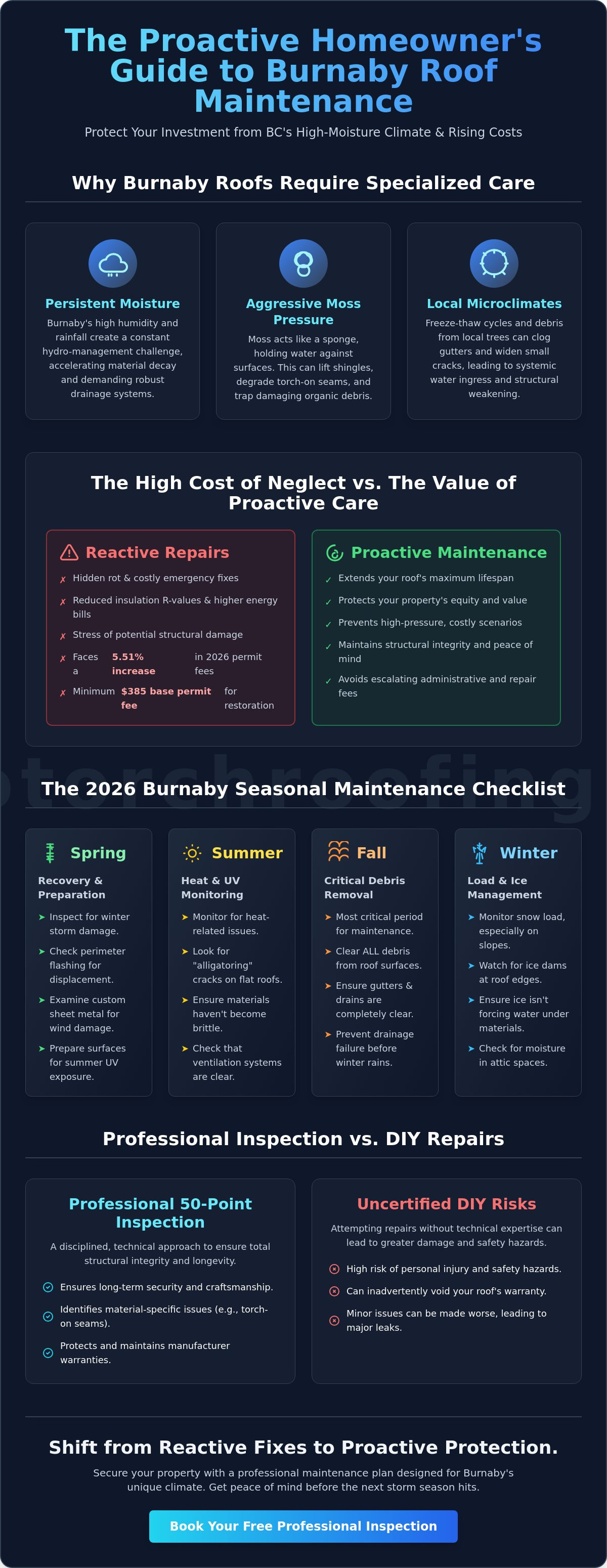
Ignoring minor issues in a wet climate leads to rapid deterioration. Water ingress often starts by saturating attic insulation, which significantly reduces your home's R-values and increases energy consumption. A small, undetected leak can progress to rot in the roof deck or a failure of the torch-on membrane. The financial difference is substantial. Beyond the cost of the repair itself, Burnaby property owners must account for the 2026 building permit fee increases, which have risen by up to 5.51% this year. With a minimum permit base fee of $385 for structural restoration, the administrative costs alone make proactive care the logical choice. Investing in regular upkeep helps you avoid high-pressure restoration scenarios while extending the life of your asset. Roof maintenance is the primary protector of property equity.
The 2026 Burnaby Roof Maintenance Checklist: Seasonal Tasks
Maintaining a property in Burnaby requires a methodical approach that aligns with our specific local weather patterns. A Burnaby roof maintenance checklist shouldn't be a generic document; it needs to account for the heavy precipitation and unique flora of the Lower Mainland. By following a seasonal schedule, you ensure that your roofing system remains a dependable shield against the elements. Utilizing professional resources like the BC Housing roof maintenance guide can help you establish a baseline for these inspections, ensuring no technical detail is overlooked.
Spring is your window for recovery and preparation. After the winter storms subside, inspect your perimeter flashing and custom sheet metal for any signs of displacement or wind damage. This is also the time to prepare for summer UV exposure, which can dry out asphalt shingles and SBS membranes. During the summer months, focus on heat-related issues. For flat roofing systems, look for "alligatoring," which is a pattern of small cracks in the bitumen that indicates the material is losing its flexibility. Fall is the most critical period for Burnaby owners. You must clear all debris before the heavy November rains arrive to prevent catastrophic drainage failure. In winter, especially for properties on North Burnaby slopes, monitor snow load and watch for ice dams that can force water upward under shingles or cedar shakes.
Exterior Inspection Points
Walk your property perimeter with binoculars or a ladder to identify visible defects. Look for missing, curled, or "balding" asphalt shingles where the protective granules have washed away. On flat sections, check for "ponding" water that remains 48 hours after a rainfall, as this indicates a potential structural drainage issue. Inspect all custom sheet metal components for signs of rust or gaps in the sealant that could allow moisture to bypass your primary waterproofing layer.
Drainage and Gutter Health
Effective hydro-management depends on clear pathways for water. In Burnaby, maple keys and pine needles are notorious for clogging internal drains and gutters. Ensure all organic debris is removed and verify that downspouts direct water at least six feet away from your foundation. Check your gutter spikes and brackets; the weight of wet debris often causes sagging, which disrupts the necessary slope for water transit. If you notice recurring drainage issues, a professional roof maintenance assessment can identify if your custom sheet metal requires adjustment.
Biological Growth Control
Burnaby’s humidity fosters rapid moss and algae growth. Identify moss clusters early, as they hold moisture against the roof surface and can lead to rot. Look for black soot-like streaks, which are often Gloeocapsa magma algae. Keep the area clear by trimming overhanging branches that provide shade and drop debris. Finally, inspect your soffits and vents for signs of bird or rodent nesting, as these can block essential airflow and compromise your attic’s thermal performance.
Material-Specific Care: Torch-On vs. Asphalt Shingles
Burnaby's architectural landscape is a blend of traditional sloped homes and modern flat-roof designs. This diversity means a Burnaby roof maintenance checklist must be tailored to the specific material protecting your property. High-slope systems, such as asphalt shingles or cedar shakes, rely on the shedding of water through gravity. In contrast, low-slope or flat roofing systems utilize SBS membranes to create a continuous waterproof seal. Understanding these technical differences allows you to apply the correct maintenance rhythm to ensure longevity and structural integrity.
While asphalt shingles are a common choice due to their 15 to 25-year lifespan, they're particularly vulnerable to the mechanical wear of the Lower Mainland’s heavy rainfall. Conversely, torch-on systems provide superior protection for modern builds but require a higher level of technical scrutiny at the seams. Regardless of the material, modern Burnaby architecture often incorporates custom sheet metal for perimeter flashing and drainage. These components require their own inspection routine to prevent moisture from bypassing the primary membrane.
Maintaining Torch-On (SBS) Membranes
SBS membranes are engineered for durability, but their performance depends entirely on the craftsmanship of the seams. During your inspection, look closely for "delamination," which occurs when the layers of the membrane begin to lift or separate. This is a critical failure point that requires professional attention. You should also check the granule surface of the membrane. If you notice significant thinning or "bald spots," the underlying bitumen is exposed to UV damage, which leads to brittleness. Finally, verify the integrity of all penetrations. Vents, skylights, and drains on flat surfaces are common sites for water ingress if the waterproofing seals have degraded over time.
Asphalt Shingle and Cedar Shake Tips
Asphalt shingles face significant stress during atmospheric rivers. Monitor your roof for "clawing" or lifting shingles. When the edges of a shingle curl upward, they catch the wind more easily, which can lead to blow-offs during a storm. You should also watch for "nail pops." These occur when a fastener backs out of the wood decking, creating a small bump that can eventually wear a hole through the shingle above it. If your property features cedar shakes, pay close attention to shaded areas where moisture lingers. Cedar is prone to splitting and rot if it doesn't dry out completely between rain cycles. Identifying these micro-leaks early is the best way to protect your property equity and avoid the high cost of emergency restoration.
Professional Inspection vs. DIY: Safety and Warranties
Ground-level inspections are a great start for any property owner using a Burnaby roof maintenance checklist. However, taking the next step onto a ladder requires extreme caution. Burnaby’s high moisture levels create slick surfaces, often hidden under a thin layer of algae or moss. A fall from even a single-story residential roof can be life-altering. Beyond physical safety, there's the matter of liability. In British Columbia, professional contractors must maintain WorkSafeBC compliance. When you hire an insured team, you transfer the risk away from yourself, ensuring that your property is protected without exposing you to legal or financial jeopardy in the event of an accident.
Technical accuracy is the second pillar of professional care. A professional eye sees "capillary action" leaks, where water is pulled uphill through narrow gaps, that DIYers often miss. These hidden pathways allow moisture to bypass perimeter flashing and enter the roof deck. By the time a homeowner notices a problem, the structural damage is often already advanced. A professional inspection results in a "Roof Health Report," which is an essential document for insurance claims. If a major storm hits, having a documented history of professional care makes the claims process much smoother and faster.
When to Call a Professional
Identify these red flags that require immediate technical intervention rather than a DIY approach:
• Internal ceiling staining or "bubbling" paint, which indicates active water ingress.
• Visible sagging in the roofline or gutter system, suggesting structural weight issues or rot.
• Post-storm debris or visible lifting of shingles after high-wind events.
Protecting Your Warranty in 2026
Manufacturer warranties are not unconditional. Most require documented evidence of regular roof maintenance to remain valid. In 2026, manufacturers have become more stringent about "proof of care" before approving claims for material failure. Using unapproved sealants or improper DIY fastening techniques can instantly void your coverage. Professional maintenance logs serve as a legal shield, proving that you have upheld your responsibility as a property owner. To ensure your system remains within warranty guidelines and maintains its structural integrity, consider scheduling a professional roof assessment to document your property's current health.
Secure Your Property with a Pro Torch Maintenance Plan
Implementing a Burnaby roof maintenance checklist is the first step toward long-term security, but the final step is professional execution. For over 25 years, Pro Torch Roofing has served as a family-owned local expert, providing property owners with the technical depth required to withstand the Lower Mainland's climate. We don't just look for leaks; we analyze the structural health of your entire roofing system. Our approach is built on the concept of protection, ensuring that every component, from the SBS membranes to the perimeter flashing, functions as a cohesive unit to safeguard your equity.
A central part of our service is the 50-point professional inspection process. This methodical assessment goes far beyond a surface-level scan. We examine the integrity of custom sheet metal transitions, check for membrane delamination, and verify that drainage systems are optimized for maximum hydro-management. By identifying microscopic fissures or drainage bottlenecks before they escalate, we help you avoid the high cost of emergency restoration and the administrative complexities of the 2026 digital permit system for structural repairs.
The Pro Torch Advantage
Our specialization in torch-on systems makes us uniquely qualified for Burnaby’s modern residential and commercial architecture. We understand the nuances of the 2026 BC Building Code and how it applies to snow loads and water drainage in our specific region. This local knowledge allows us to provide expert craftsmanship that generic contractors often overlook. We prioritize transparent communication, providing you with a clear technical remedy for any issue we discover. Whether your property utilizes asphalt shingles, cedar shakes, or high-performance waterproofing membranes, our goal is to instill immediate confidence in your roof’s ability to perform.
Ready for the Next Storm?
Proactive care is always more cost-effective than reactive repair. While a DIY checklist helps you monitor your property between seasons, a professional plan ensures that manufacturer warranties remain valid and that your building envelope remains airtight. We encourage all Burnaby property owners to keep their maintenance records updated and to stay ahead of the atmospheric rivers that define our winters. Taking action today provides the peace of mind that comes from knowing your home or business is protected by disciplined, local experts. Contact Pro Torch Roofing today for your professional Burnaby roof inspection and secure your property's future.
Protect Your Property for the 2026 Storm Season
Maintaining your property’s structural integrity in the Lower Mainland requires more than a casual glance. By following a structured Burnaby roof maintenance checklist, you shift from reactive troubleshooting to a professional strategy of hydro-management. We've explored how seasonal inspections and material-specific care for torch-on systems or asphalt shingles prevent the hidden rot that leads to expensive restoration. Your roof is your building's primary defense; it deserves a disciplined approach to craftsmanship and longevity.
Pro Torch Roofing brings over 25 years of experience as a family-owned and operated local business. We specialize in the technical demands of torch-on roofing and custom sheet metal, ensuring your perimeter protection is impenetrable. Don't wait for a leak to signal a problem. Secure your peace of mind by choosing a team that understands Burnaby’s unique microclimates and building codes. Book Your 50-Point Burnaby Roof Inspection Now to ensure your property remains safe and secure through every season. We look forward to helping you protect your home or business for years to come.
Frequently Asked Questions
How often should I perform roof maintenance in Burnaby?
You should perform maintenance at least twice per year, ideally in the spring and fall. Burnaby's high annual precipitation and heavy tree debris make these seasonal checks essential for clearing gutters and inspecting for winter storm damage. Consistent intervals prevent minor issues like cracked perimeter flashing from escalating into structural failures that require a building permit.
Can I clean my own gutters, or should I hire a professional?
You can clear minor debris from ground level using a telescopic wand, but hiring a professional is safer for any ladder-based work. Professional crews use specialized equipment to ensure internal drains and custom sheet metal gutters are fully functional. They also identify technical issues, such as sagging brackets or improper slopes, that are difficult for homeowners to spot from the ground.
Does moss on my roof actually cause damage, or is it just an eyesore?
Moss causes significant structural damage by acting as a sponge that holds moisture against the roof surface. This persistent dampness can rot the underlying wood deck and lift the edges of shingles or cedar shakes, allowing water to enter the building envelope. In Burnaby's humid climate, neglected moss growth can significantly shorten the lifespan of your entire roofing system.
What is the best time of year to schedule a roof inspection in the Lower Mainland?
Late summer or early autumn is the best time to schedule an inspection before the heavy November rains arrive. This timing allows for any necessary repairs to be completed in dry conditions, ensuring sealants and membranes bond correctly. It's a vital step in any Burnaby roof maintenance checklist to prepare your property for the upcoming atmospheric rivers.
How long does a typical torch-on roof last with proper maintenance?
A professionally installed torch-on roof typically lasts between 20 and 25 years with consistent maintenance. The longevity of SBS membranes depends on keeping seams tight and ensuring drainage outlets remain clear of organic debris. Regular inspections of the granule surface help prevent UV degradation and extend the system's structural integrity over two decades.
Will my home insurance cover a leak if I haven’t maintained my roof?
Most insurance policies don't cover damage resulting from gradual wear and tear or a lack of maintenance. Insurers view roof care as a homeowner responsibility and may deny claims if there's evidence of long-term neglect. Keeping a detailed log as part of your Burnaby roof maintenance checklist provides the "proof of care" needed to support successful insurance claims after a major storm.
What are the signs that my roof flashing needs repair?
Look for visible rust, gaps in sealant, or metal that has pulled away from chimneys and walls. Flashing is a critical waterproofing component, and even minor separation can lead to capillary action leaks where water is pulled uphill. If your custom sheet metal appears warped or detached, it's a clear sign that your perimeter protection is compromised and requires a professional assessment.
How much does a professional roof maintenance service cost in Burnaby?
The cost of professional maintenance depends on your roof's size, material type, and current condition. While industry rates vary across the Lower Mainland, investing in a proactive plan is significantly more affordable than emergency repairs or structural restoration. You should check with a local expert for a detailed assessment that is tailored to your property's specific technical needs.
